
 Contacto
 Cómo comprar
Entrega
Guía de compras
 Inglés
 180 b
180 b
Clientes que también han comprado







 /
/
 Tapa blanda
 21.69
€
21.69
€



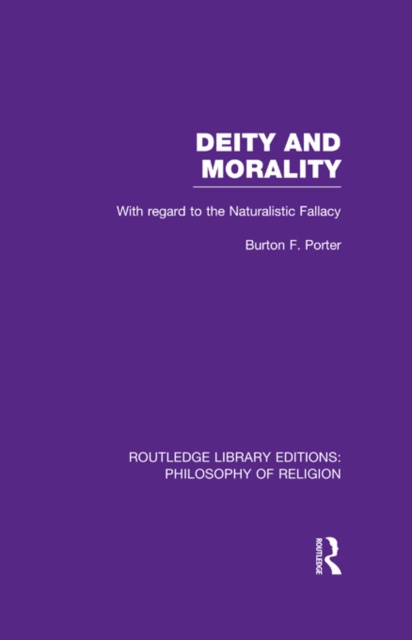
This book describes the "e;naturalistic fallacy"e;, as attributed to Hume, that non-moral premises cannot logically entail a moral conclusion, and distinguishes it from the similarly named though subtly different fallacy identified by Moore in Principia Ethica by comparing and contrasting its presence in a range of ethical or moral systems. A review of Hume's position elicits the implications to theological naturalism, and how this relates to Kierkegaard's "e;paradox of faith"e; and the doctrine of ineffability. Methods of logical examination of religious language are discussed, leading to the dissection of the analytic proposition that 'God is Good' and of the connotations of proper names. Porter concludes from this a solution to the naturalistic fallacy: that "e;good"e; is essential to "e;God"e; by definition, and therefore that premises relating to God must contain an inherent morality.Originally published in 1968, this book includes topics such as Mediaeval attitudes to deity and morality; Religious myth, images and language; Comparative conceptions of deity.


Sobre el libro
Inglés

Regale este libro hoy
Es fácil
1 Añadir al carrito y elegir Entregar como regalo en el checkout 2 Le enviaremos un vale 3 El libro llegará a la dirección del destinatarioTambién puede interesarle




¡Hola! Soy Libroamiko, tu asesor de libros.
¿Cómo puedo ayudarte?