
 Contacto
 Cómo comprar
Entrega
Guía de compras
 Chino
Chino
 128 b
128 b
 Próximamente
 Nuevo
Nuevo
Hasta 30 días para devoluciones

理论、应用与代码--每一页都并重。
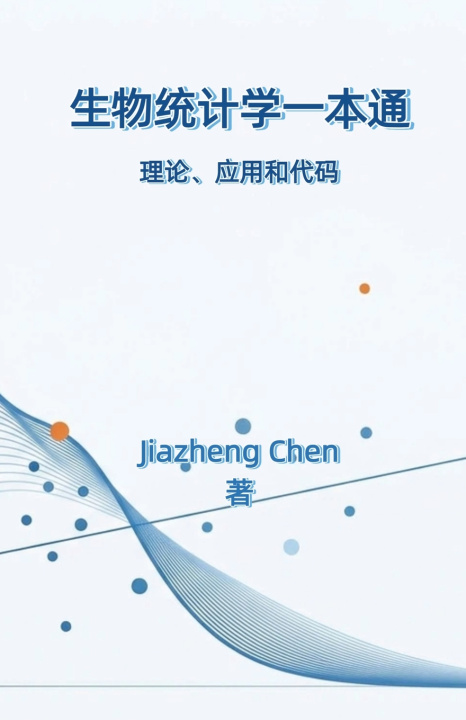
生物统计学真正回报的,不只是知道"该用哪个检验",更是懂得它"为什么成立"以及"怎样把它做出来"。《生物统计学一本通》把这三者合于一册:每种方法背后的原理、它真正派上用场的场景,以及今天就能运行的可用代码。
全书 46 章、7 个附录,从描述统计与假设检验的逻辑,一路讲到相关与回归、广义线性模型、生存分析、概率与贝叶斯思维、重抽样、多重插补、因果推断、现代临床试验设计,直至正则化、多元方法与聚类。每个概念都从第一性原理讲起,再放到贴近现实的问题中演练,让思路真正扎根。
本书的独到之处在于:每种方法都用四套软件--R、SAS、SPSS 与 Stata--各演示一遍,且全部基于原创、经完整核验的数据集。无论你的实验室、临床科室或期刊要求哪种软件,你都能复现每一个结果,把分析平滑迁移过去,免去"换软件重写"的烦恼。第 40 章与专门的附录逐条对照四套软件的命令,正文还特别标注那些最常导致"换个软件结果就对不上"的默认设置差异(参照类别、置信区间算法、连续性校正等)。书中每一个数字都是真的。数据集为原创,每一条公式、每一幅图、每一段代码都经过实际计算与核对--你读到的,就是你运行时会得到的。
适读人群: 公共卫生、医学与生命科学专业的研究生;分析自有数据的科研人员与临床医生;以及希望拥有一本可靠、以代码为先、横跨四套软件的案头参考书的执业生物统计师。初学者能找到一条从零起步的清晰路径,资深分析者则获得一位可靠的案头伙伴。
Theory, application, and code-together on every page.
Biostatistics rewards those who grasp not just which test to run, but why it works and how to carry it out. Biostatistics All-in-One brings all three together in a single volume: the reasoning behind each method, the settings where it matters, and working code you can run today.
Spanning 46 chapters and 7 appendices, the book moves from descriptive statistics and the logic of hypothesis testing through correlation and regression, generalized linear models, survival analysis, probability and Bayesian thinking, resampling, multiple imputation, causal inference, and the design of modern clinical trials-all the way to regularization, multivariate methods, and clustering. Concepts are built from first principles, then put to work on realistic problems, so the ideas stick.
What sets this book apart is that every method is demonstrated four ways-in R, SAS, SPSS, and Stata-using original, fully verified datasets. Whatever software your lab, clinic, or journal expects, you can reproduce every result and carry the analysis over without translation headaches. Chapter 40 and a dedicated appendix map the four packages command-for-command, and the text flags the default-setting differences (reference categories, confidence-interval methods, continuity corrections) that most often make results "disagree" across software.
Who this book is for: graduate students in public health, medicine, and the life sciences; researchers and clinicians who analyze their own data; and practicing biostatisticians who want a dependable, code-first desk reference across four software packages. Newcomers will find a clear path from the ground up, while experienced analysts gain a reliable bench companion.


Sobre el libro
Chino

Regale este libro hoy
Es fácil
1 Añadir al carrito y elegir Entregar como regalo en el checkout 2 Le enviaremos un vale 3 El libro llegará a la dirección del destinatario¡Hola! Soy Libroamiko, tu asesor de libros.
¿Cómo puedo ayudarte?