
 Contacto
 Cómo comprar
Entrega
Guía de compras
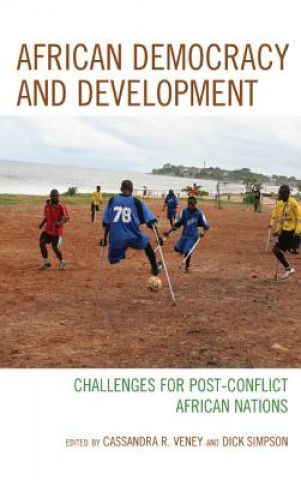
African Democracy and Development
Challenges for Post-Conflict African Nations
 Inglés
 214 b
214 b
Hasta 30 días para devoluciones
Clientes que también han comprado








 /
/
 Tapa blanda
 44.19
€
44.19
€




Various African nations have undergone conflict situations since they gained their independence. This book focuses on particular countries that have faced conflict (civil wars and genocide) and are now in the process of rebuilding their political, economic, social, and educational institutions. The countries that are addressed in the book include: Rwanda, Mozambique, Sierra Leone, Liberia, and the Democratic Republic of the Congo. In addition, there is a chapter that addresses the role of the African Diaspora in conflict and post-conflict countries that include Eritrea, Liberia, and Somalia. The book includes an examination of the various actors who are involved in post-conflict rebuilding and reconstruction that involves internal and external participants. For example, it is clear that the internal actors involve Africans themselves as ordinary citizens, members of local and national governments, and members of non-governmental organizations. This allows the reader to understand the agency and empowerment of Africans in post-conflict reconstruction. Various institutions are addressed within the context of the roles they play in establishing governance organizations such as the Truth and Reconciliation Commission in Sierra Leone, the African Union, chiefs in Liberia, and non-governmental organizations. Furthermore, the external actors who are involved in post-conflict reconstruction are examined such as international non-governmental organizations and the African Diaspora. They both have their own constituents and agendas and can and do play a positive and negative role in post-conflict reconstruction. It is obvious that countries that are addressed in the book are in dire need of financial assistant to rebuild much needed infrastructure that was destroyed during the conflict. All of the countries covered in the book need schools, medical facilities, roads, bridges, airports, ports, and the government does not have the money to provide these. This is where the international non-governmental organizations and the African Diaspora play an important role. The chapters that address these issues are cognizant of their importance and at the same time, the authors realize that sovereignty can be undermined if Africans are not in the forefront of policy and decision making that will determine their future. There are chapters that provide a gendered analysis of post-conflict when it is appropriate. For example, it is clear that women, men, boys, and girls experienced conflict in different ways because of their gender. They all participated in the conflict in various ways. Consequently, the efforts at peace building are given a gendered analysis in terms of what has happened to women and girls in the demobilization and rehabilitation period including an excellent analysis of land reform in Rwanda and how that affects women and members of a certain ethnic group that are often overlooked in the examination of the 1994 genocide. This book provides a very good contribution to the literature on conflict and post-conflict African countries because of its depth and the vast topics it embraces. It provides an analysis of the internal and external actors, the role of gender in post-conflict decision making, and it provides the voices of ordinary Africans who were affected by the conflict, and who are determined to live productive lives.


Sobre el libro
Inglés
Categorías

Regale este libro hoy
Es fácil
1 Añadir al carrito y elegir Entregar como regalo en el checkout 2 Le enviaremos un vale 3 El libro llegará a la dirección del destinatarioTambién puede interesarle
 /
Tapa blanda
21.79
€
/
Tapa blanda
21.79
€








¡Hola! Soy Libroamiko, tu asesor de libros.
¿Cómo puedo ayudarte?