
 Contacto
 Cómo comprar
Entrega
Guía de compras
Algorithm Design for Networked Information Technology Systems
 Inglés
 289 b
289 b
Hasta 30 días para devoluciones
Clientes que también han comprado
















 /
/
 Tapa blanda
 29.95
€
29.95
€









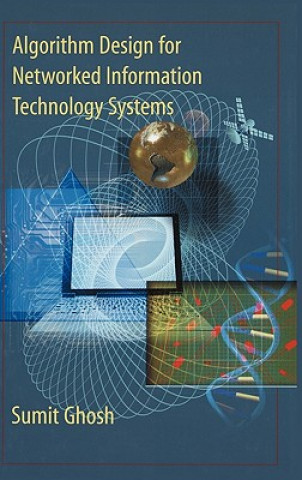
This book presents a scientific theory of Networked information technology (NIT) systems and logically develops the fundamental principles to help synthesize control and coordination algorithms for these systems. The algorithms described are asynchronous, distributed decision-making (ADDM) algorithms, and their characteristics include correct operation, robustness, reliability, scalability, stability, survivability, and performance. The book explains through case studies the conception, development, experimental testing, validation, and rigorous performance analysis of practical ADDM algorithms for real-world systems from a number of diverse disciplines. Practitioners, professionals, and advanced students will find the book an authoritative resource for the design and analysis of NIT systems algorithms.§Topics and features:§Develops a logical and practical approach to synthesizing ADDM algorithms for NIT systems §Utilizes a scientific method to address the design & testing of NIT systems §Incorporates case studies to clearly convey principles and real-world applications §Provides a full context for engineers who design, build, deploy, maintain, and refine network-centric systems spanning many human activities §Offers background on core principles underlying the nature of network-centric systems§Networked information technology (NIT) systems are synonymous with network-centric or net-centric systems and constitute the cornerstone of the fast approaching information age. To date, however, the design and development of NIT systems have been ad hoc and have suffered from a dearth of supporting scientific and theoretical principles. §Algorithm Design for Networked Information Technology Systems presents a scientific theory of NIT systems and logically develops the fundamental principles to help synthesize control and coordination algorithms for these systems. The algorithms described are asynchronous, distributed decision-making (ADDM) algorithms, and their characteristics include correct operation, robustness, reliability, scalability, stability, survivability, and performance. The book explains through case studies the conception, development, experimental testing, validation, and rigorous performance analysis of practical ADDM algorithms for real-world systems from a number of diverse disciplines. §Topics and features:§Develops a logical and practical approach to synthesizing ADDM algorithms for NIT systems §Utilizes a scientific method to address the design & testing of NIT systems §Incorporates case studies to clearly convey principles and real-world applications §Provides a full context for engineers who design, build, deploy, maintain, and refine network-centric systems spanning many human activities §Offers background on core principles underlying the nature of network-centric systems §NIT systems are critical to new information systems and network- or web-connected control systems in all types of organizations. This new monograph is the first to systematically derive a conceptual foundation for NIT systems and fully present an integrated view of the requisite control and coordination (ADDM) algorithms. Practitioners, professionals, and advanced students will find the book an authoritative resource for the design and analysis of NIT systems algorithms.


Sobre el libro
Inglés

Regale este libro hoy
Es fácil
1 Añadir al carrito y elegir Entregar como regalo en el checkout 2 Le enviaremos un vale 3 El libro llegará a la dirección del destinatarioTambién puede interesarle







 /
Tapa blanda
19.09
€
/
Tapa blanda
19.09
€

 /
Tapa blanda
27.19
€
/
Tapa blanda
27.19
€










 /
Tapa blanda
10.69
€
/
Tapa blanda
10.69
€






¡Hola! Soy Libroamiko, tu asesor de libros.
¿Cómo puedo ayudarte?