
 Contacto
 Cómo comprar
Entrega
Guía de compras
 Inglés
 35 b
35 b
 Próximamente
 Nuevo
Nuevo
Hasta 30 días para devoluciones

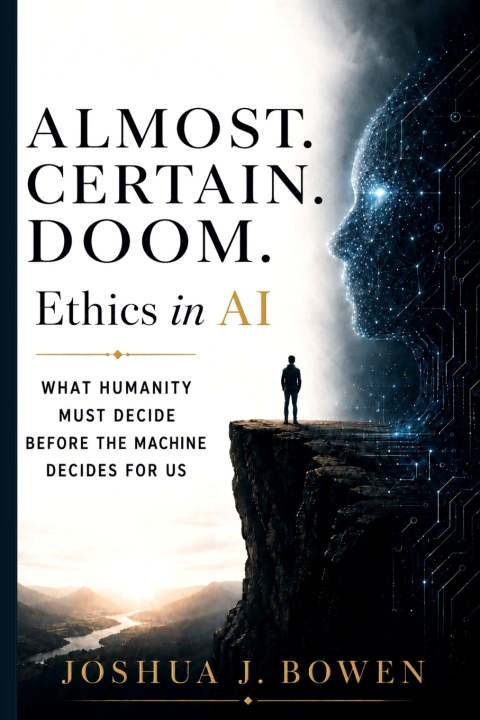
Artificial intelligence may be the most powerful technology humanity has ever created. The question is no longer simply what it can do. The question is what should we ask it to do?
In Almost. Certain. Doom. Ethics in AI, Joshua J. Bowen explores the defining moral question of the intelligent age. Will artificial intelligence reflect the best of humanity, or will it amplify the worst of us?
AI is already changing business, government, education, family life, creativity, work, and the way we understand truth. It can help cure disease, improve learning, expand human capability, reduce meaningless labor, and solve problems once thought impossible. It can also deepen inequality, automate bias, concentrate power, manipulate behavior, invade privacy, and allow people to hide responsibility behind the language of technology.
This book examines the three futures people often imagine when they think about AI.
The first is doom. What happens if AI becomes too powerful and decides humanity is the problem?
The second is division. What happens if AI remains controlled by the wealthy, powerful, and connected, creating a wider gap between those who benefit and those who are left behind?
The third is promise. What happens if AI, built with wisdom and restraint, helps humanity become more creative, compassionate, responsible, and fully human?
Through history, philosophy, business, government, education, personal life, and the formation of the human mind, Bowen argues that the future of AI will not be decided by technology alone. It will be shaped by the values we reward, the systems we build, the behaviors we normalize, and the choices we make every day.
This is not a book about fear.
It is a book about responsibility.
It is a call to business leaders, educators, parents, public officials, professionals, and everyday citizens to think clearly before convenience becomes dependence, before efficiency replaces judgment, and before powerful systems begin shaping the future without a moral foundation.
Artificial intelligence does not need to become human.
It needs to be built to protect what is human.


Sobre el libro
Inglés

Regale este libro hoy
Es fácil
1 Añadir al carrito y elegir Entregar como regalo en el checkout 2 Le enviaremos un vale 3 El libro llegará a la dirección del destinatario¡Hola! Soy Libroamiko, tu asesor de libros.
¿Cómo puedo ayudarte?