
 Contacto
 Cómo comprar
Entrega
Guía de compras
 Inglés
 74 b
74 b
 Nuevo
Nuevo
Política de devolución de 30 días

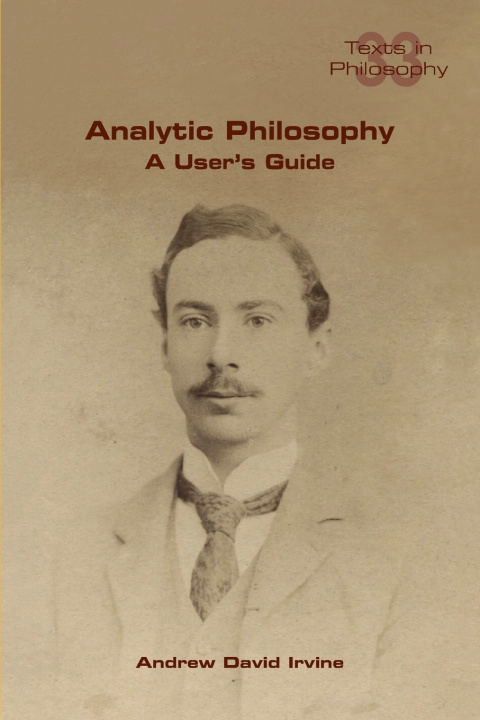
"Any careful, systematic investigation of the world involves three things: accurate observation, precise description and reliable reasoning".
For some 2,000 years, the meanings of the words 'philosophia' and 'scientia' were closely intertwined. 'Philosophia' happened to be a Greek word, meaning love of wisdom. 'Scientia' happened to be a Latin word, meaning knowledge or learning. Both philosophia and scientia involved the careful, systematic study of the world. As late as the nineteenth century, the two words were still being used in their English transliterations often interchangeably.
Today, the distinction between philosophy and science has become more firmly established. Science uses observation and experimentation to investigate the substance, structure and behaviour of the world. In contrast, in the words of the American philosopher Jerry Fodor, philosophy is "what you do to a problem until it's clear enough to solve it by doing science". Philosophy involves the clarification of concepts. It involves the use of reason and observation to ensure that the vocabulary and concepts we use when we describe the world are up to the task.
Philosophy in this sense turns out to be not so much a branch of knowledge as a commitment to clarity. As the Cambridge philosopher Ludwig Wittgenstein puts it, "Philosophy aims at the logical clarification of thoughts. Philosophy is not a body of doctrine but an activity".
This distinction between the armchair and the workbench-between today's philosophy and today's science-is a core feature of what has come to be known as analytic philosophy. For the analytic philosopher, it is not the job of philosophers and scientists to investigate different branches of knowledge. Instead, it is the job of philosophy, science and other disciplines-including history, law, mathematics, medicine and the rest-to contribute different tools to the same job: the job of discovering and understanding the fascinating world around us.
Andrew David Irvine is a professor in the Department of Economics, Philosophy and Political Science at the Okanagan campus of The University of British Columbia.


Sobre el libro
Inglés

Regale este libro hoy
Es fácil
1 Añadir al carrito y elegir Entregar como regalo en el checkout 2 Le enviaremos un vale 3 El libro llegará a la dirección del destinatario¡Hola! Soy Libroamiko, tu asesor de libros.
¿Cómo puedo ayudarte?