
 Contacto
 Cómo comprar
Entrega
Guía de compras
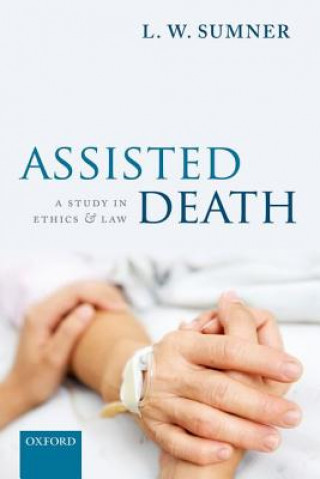
Assisted Death
 Inglés
 102 b
102 b
Política de devolución de 30 días
Clientes que también han comprado























Ethical and legal issues concerning physician-assisted suicide and euthanasia are very much on the public agenda in many jurisdictions. In this timely book L.W. Sumner addresses these issues within the wider context of palliative care for patients in the dying process. His ethical conclusion is that a bright line between assisted death and other widely accepted end-of-life practices, including the withdrawal of life-sustaining treatment, pain control through high-dose opioids, and terminal sedation, cannot be justified. In the course of the ethical argument many familiar themes are given careful and thorough treatment: conceptions of death, the badness of death, the wrongness of killing, informed consent and refusal, the ethics of suicide, cause of death, the double effect, the sanctity of life, the 'active/passive' distinction, advance directives, and nonvoluntary euthanasia. The legal discussion opens with a survey of some prominent prohibitionist and regulatory regimes and then outlines a model regulatory policy for assisted death. Sumner concludes by defending this policy against a wide range of common objections, including those which appeal to slippery slopes or the possibility of abuse, and by asking how the transition to a regulatory regime might be managed in three common law prohibitionist jurisdictions.


Sobre el libro
Inglés

Regale este libro hoy
Es fácil
1 Añadir al carrito y elegir Entregar como regalo en el checkout 2 Le enviaremos un vale 3 El libro llegará a la dirección del destinatarioTambién puede interesarle


 /
/
 Tapa blanda
 10.69
€
10.69
€









 /
Tapa blanda
8.79
€
/
Tapa blanda
8.79
€





 /
Tapa blanda
37.69
€
/
Tapa blanda
37.69
€
 /
Tapa dura
327.69
€
/
Tapa dura
327.69
€






¡Hola! Soy Libroamiko, tu asesor de libros.
¿Cómo puedo ayudarte?