Contacto
 Cómo comprar
Entrega
Guía de compras
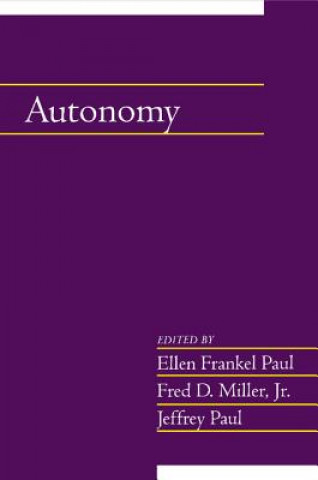
Autonomy: Volume 20, Part 2
 Inglés
 97 b
97 b
Hasta 30 días para devoluciones
Clientes que también han comprado

 /
/
 Tapa blanda
 33.69
€
33.69
€




 /
Tapa blanda
20.09
€
/
Tapa blanda
20.09
€

 /
Libro
19.59
€
/
Libro
19.59
€




 /
Tapa blanda
59.99
€
/
Tapa blanda
59.99
€

 /
Tapa blanda
17.89
€
/
Tapa blanda
17.89
€















A central idea in moral and political philosophy, 'autonomy' is generally understood as some form of self-governance or self-direction. Certain Stoics, modern philosophers such as Spinoza, and most importantly, Immanuel Kant, are among the great philosophers who have offered important insights on the concept. Some theorists analyze autonomy in terms of the self being moved by its higher-order desires. Others argue that autonomy must be understood in terms of acting from reason or from a sense of moral duty independent of the passions. Autonomy seems closely related to the notion of freedom, but in what sense: freedom from coercion, freedom from psychological constraints, or freedom from material necessity? Various approaches to these and similar questions yield different implications for public policy. Is capitalism, social democracy or socialism more favorable to autonomy? The essays in this volume address these important questions.


Sobre el libro
Inglés

Regale este libro hoy
Es fácil
1 Añadir al carrito y elegir Entregar como regalo en el checkout 2 Le enviaremos un vale 3 El libro llegará a la dirección del destinatarioTambién puede interesarle










 /
Tapa blanda
102.79
€
/
Tapa blanda
102.79
€