Contacto
 Cómo comprar
Entrega
Guía de compras
 Inglés
 185 b
185 b
Política de devolución de 30 días
Clientes que también han comprado










 /
/
 Tapa blanda
 41.49
€
41.49
€

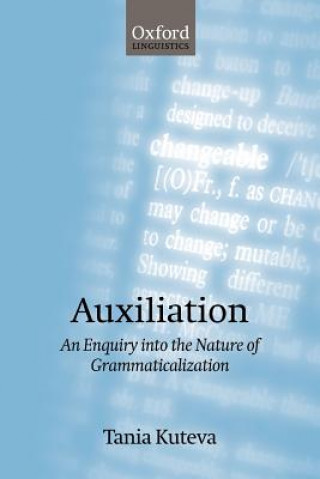
Auxiliation describes the process by which auxiliary verbs - such as do, may, must, will, and have - develop from lexical verbs meaning exist, possess, hold, etc. The sequence of verb followed by complement turns into the grammatical structure of marker followed by main verb. This transformation, which involves morphosyntactic, semantic, and phonological changes, can be seen operating in the same direction across many (if not all) languages. There is no accepted theory to explain it. Tania Kuteva presents a cross-linguistic study of the phenomenon. She seeks: to explore the cognitive forces underlying auxiliation; to shed light on how auxiliation relates to discourse and to pragmatic considerations; and to show the relation between the conceptual-semantic and discourse-pragmatic factors at work in the process. Combining recent grammaticalization theory with insights from the psychology of language use, the author also offers a new perspective on how grammaticalization occurs in everyday linguistic communication. The book makes significant contributions to an explanatory theory of auxiliation, to the study of language change, and to the understanding of linguistic communication.


Sobre el libro
Inglés