
 Contacto
 Cómo comprar
Entrega
Guía de compras
 Inglés
 95 b
95 b
Hasta 30 días para devoluciones
Clientes que también han comprado






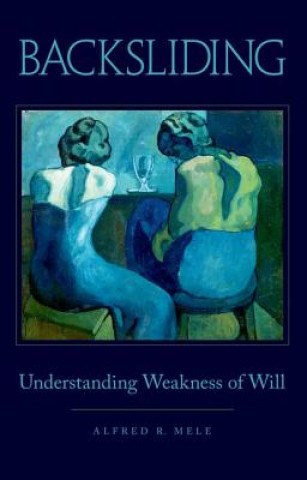
People backslide.They freely do things they believe it would be best on the whole not to do - a judgment developed from their own point of view, not just the perspective of their peers or their parents. The aim of this book is to to clarify the nature of backsliding - of actions that display some weakness of will - using traditional philosophical techniques that date back to Plato and Aristotle (whose work on weakness of will or "akrasia" he discusses) and some new studies in the emerging field of experimental philosophy. Mele then attacks the thesis that backsliding is an illusion because people never freely act contrarily to what they judge is best. He argues that it is extremely plausible that if people ever act freely, they sometimes backslide. At the book's heart is the development of a theoretical and empirical framework that sheds light both on backsliding and on exercises of self-control that prevent it. Here, Mele draws on work in social and developmental psychology and in psychiatry to motivate a view of human behavior in which both backsliding and overcoming the temptation to backslide are explicable. He argues that backsliding is no illusion and our theories about the springs of action, the power of evaluative judgments, human agency, human rationality, practical reasoning, and motivation should accommodate backsliding.


Sobre el libro
Inglés

Regale este libro hoy
Es fácil
1 Añadir al carrito y elegir Entregar como regalo en el checkout 2 Le enviaremos un vale 3 El libro llegará a la dirección del destinatarioTambién puede interesarle
 /
/
 Tapa blanda
 17.29
€
17.29
€










¡Hola! Soy Libroamiko, tu asesor de libros.
¿Cómo puedo ayudarte?