
 Contacto
 Cómo comprar
Entrega
Guía de compras
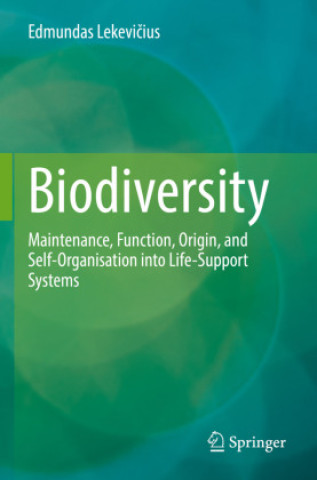
Biodiversity
Maintenance, Function, Origin, and Self-Organisation into Life-Support Systems
 Inglés
 274 b
274 b
Hasta 30 días para devoluciones
Clientes que también han comprado

 /
/
 Tapa dura
 42.69
€
42.69
€

 /
Tapa blanda
70.29
€
/
Tapa blanda
70.29
€




 /
Tapa blanda
39.59
€
/
Tapa blanda
39.59
€
 /
Tapa dura
200.59
€
/
Tapa dura
200.59
€




Species are not functionally independent. From a long-term perspective, only ecosystem with a fully integrated nutrient cycle is alive. The lack of trophic autonomy should be considered one of the key factors that ensure and maintain biodiversity. The variability of abiotic conditions, both in space and in time, also creates a huge diversity of niches and subniches for genotypes and species. In addition, life maintains its essential variables (biomass and productivity) as stable as possible due to the diversity of structures (genes, macromolecules, metabolic pathways, genotypes, species, etc.): the structures that reach optima are multiplied and thus activated, while the functioning of those which lost their optima is suppressed. The facts and concepts presented in this monograph thus support the conclusions that (a) genotype and species diversity is supported by trophic specialisation(b) biodiversity helps to stabilise the functions (essential variables) of individuals, populations, and ecological communities(c) in evolution, the emergence of biodiversity is determined by heritable variation and the advantage of specialised (more effective) structures over non-specialised ones(d) biodiversity is characterised by its ability to increase itself and to organise itself into relatively consistent structures, which we call production pyramids and nutrient cycles. This book therefore provides an answer to the question "why the diversity of life is of such and such a nature".


Sobre el libro
Inglés

Regale este libro hoy
Es fácil
1 Añadir al carrito y elegir Entregar como regalo en el checkout 2 Le enviaremos un vale 3 El libro llegará a la dirección del destinatarioTambién puede interesarle


 /
Tapa blanda
12.99
€
/
Tapa blanda
12.99
€




 /
Tapa blanda
43.09
€
/
Tapa blanda
43.09
€






 /
Tapa blanda
21.99
€
/
Tapa blanda
21.99
€





 /
Tapa blanda
43.29
€
/
Tapa blanda
43.29
€




¡Hola! Soy Libroamiko, tu asesor de libros.
¿Cómo puedo ayudarte?