
 Contacto
 Cómo comprar
Entrega
Guía de compras
Business-State Relations And Development
 Inglés
 155 b
155 b
Hasta 30 días para devoluciones
Clientes que también han comprado





 /
/
 Tapa blanda
 76.09
€
76.09
€






 /
Tapa blanda
24.69
€
/
Tapa blanda
24.69
€


 /
Tapa blanda
58.19
€
/
Tapa blanda
58.19
€

 /
Tapa blanda
120.89
€
/
Tapa blanda
120.89
€



 /
Tapa blanda
29.39
€
/
Tapa blanda
29.39
€

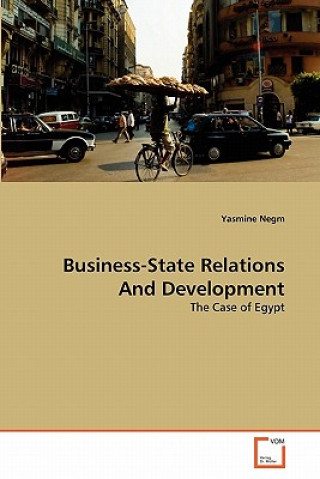
In the late 1980s, the concept of embedded autonomy became central to the literature of economic development in East Asia. Rapid economic growth in South Korea, Taiwan and Japan was attributed to the state role in development (Johnson 1982, Wade 1990, Evans 1985). The state embedded itself in the social networks of the entrepreneurs. This model of the developmental state credit that the success in East Asia to the state's structure and role in prioritizing the achievement of rapid economic development as a national goal, exerting control over private capital, and acquiring a strong administrative bureaucracy that was built on merit and protected from political influence (Polidano 1998, Wade 1992, Evans et al 1985, Henderson and Appelbaum 1992). In the original formulation of the concept of embedded autonomy, the state embeds itself in the surrounding social networks and directs it to facilitate industrial transformation and thus, boost its economy. On the other extreme, the Egyptian case provides a contrary example to the Evans model when in the mid-1980s as a new phenomenon emerged where businessmen attempted to embed themselves within the state administration.


Sobre el libro
Inglés
Categorías

Regale este libro hoy
Es fácil
1 Añadir al carrito y elegir Entregar como regalo en el checkout 2 Le enviaremos un vale 3 El libro llegará a la dirección del destinatarioTambién puede interesarle

 /
Tapa blanda
11.19
€
/
Tapa blanda
11.19
€
 /
Tapa dura
33.70
€
/
Tapa dura
33.70
€



 /
Tapa dura
34.79
€
/
Tapa dura
34.79
€


 /
Tapa blanda
25.90
€
/
Tapa blanda
25.90
€











¡Hola! Soy Libroamiko, tu asesor de libros.
¿Cómo puedo ayudarte?