Contacto
 Cómo comprar
Entrega
Guía de compras
 Inglés
 249 b
249 b
Hasta 30 días para devoluciones
Clientes que también han comprado









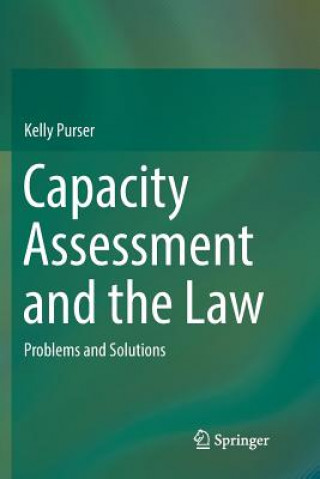
This book discusses theoretical issues, standards, and professional considerations arising when legal and health practitioners undertake legal capacity assessments in the context of wills, enduring powers of attorney and advance health directives. The potential loss of cognition can erode autonomy as individuals lose the ability to make their own legally recognised decisions. This is an inescapable problem with significant legal, social, health and policy repercussions. This work synthesises and critically analyses the existing literature, including some of the best assessment models and guiding principles internationally, to generate a new methodology and understanding of what capacity assessment best practice means. This includes the impact of assessments on individual autonomy - the ideal method building upon respect for both autonomy as well as fundamental human rights. The triggers to assess capacity, who to involve in the assessment process, as well as how to conduct that assessment process are discussed. The crucial relationship between the legal and health professionals involved in assessments, including growing concerns around practitioner liability, is also explored. This analysis is undertaken through the innovative use of a therapeutic jurisprudence lens, the effect of which is to contribute new knowledge to this complex field.


Sobre el libro
Inglés

Regale este libro hoy
Es fácil
1 Añadir al carrito y elegir Entregar como regalo en el checkout 2 Le enviaremos un vale 3 El libro llegará a la dirección del destinatarioTambién puede interesarle




 /
/
 Tapa blanda
 11.59
€
11.59
€