
 Contacto
 Cómo comprar
Entrega
Guía de compras
China in the World Bank, Imf, and Wipo
 Inglés
 329 b
329 b
Política de devolución de 30 días

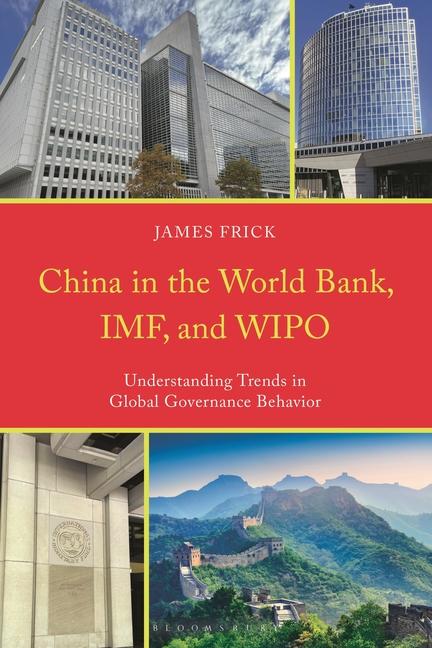
Previously one of the least connected states in the world, China is taking on a considerable role as a leading global power. It has participated and benefited from international organizations (IOs) while also influencing their institutional behavior, but it has also demonstrated limited compliance at times. China's behavior has shifted from following the rules to a desire to make and set the rules. China in the World Bank, IMF, and WIPO: Understanding Trends in Global Governance Behavior explores 40 years of China's participation within these organizations, drawing on in-depth interviews and analysis of annual reports, meeting minutes, consultations, and transcripts obtained from archived records to argue how China views its behavior can achieve its desired interests. James Frick paints a detailed picture to illustrate that in the context of relative shifts in power, variation in China's IO behaviors is predicated by the extent to which IOs conform to China's national interests. This rational behavior approach (RBA) outlines four strategies: rule-taking, rule-breaking, rule-changing, and rulemaking. As China's relative power increases over time, so does its bargaining power, leading to a more assertive rule-changing behavior as it attempts to adapt the organization to allow its ascendancy as a rule-maker.


Sobre el libro
Inglés
Categorías
