
 Contacto
 Cómo comprar
Entrega
Guía de compras
 Inglés
 87 b
87 b
 Nuevo
Nuevo
Hasta 30 días para devoluciones

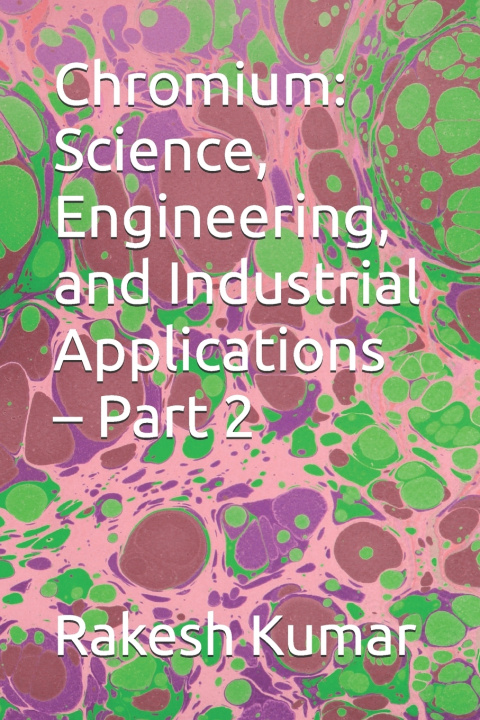
Chromium is one of the most remarkable elements in modern materials science and engineering. With the chemical symbol Cr and atomic number 24, chromium is a transition metal whose distinctive physical, chemical, and metallurgical properties have made it indispensable across a wide range of industries. Its exceptional hardness, high melting point, resistance to oxidation and corrosion, attractive surface appearance, and ability to form stable compounds and alloys have positioned chromium as a critical material for modern civilization.
The story of chromium extends from geology and mineralogy to advanced manufacturing, aerospace engineering, energy systems, electronics, and nanotechnology. Naturally occurring primarily in the mineral chromite, chromium is extracted, processed, refined, and transformed into a variety of valuable products. Ferrochromium, produced from chromite, is one of the most important alloying materials in the global steel industry. Its addition to iron-based alloys provides enhanced corrosion and oxidation resistance and forms the foundation of modern stainless steels.
The importance of chromium is perhaps most visible in stainless steel. The formation of a thin, stable, chromium-rich passive oxide layer on the surface of stainless steel gives these materials their remarkable resistance to corrosion. This property has enabled stainless steels to become essential in buildings, bridges, chemical-processing equipment, food-processing facilities, medical instruments, transportation systems, power plants, and countless consumer products.
Chromium's importance, however, extends far beyond stainless steel. Chromium-containing superalloys are used in demanding high-temperature environments such as gas turbines and aerospace engines. Chromium carbides provide exceptional hardness and wear resistance and are used in cutting tools, industrial components, thermal-spray coatings, and protective surface-engineering systems. Chromium oxide is valuable in refractories, abrasives, pigments, ceramics, and specialized coatings.
Surface engineering represents another major area of chromium technology. Conventional chromium electroplating has been widely used to provide hard, durable, and attractive surfaces. At the same time, advances in materials engineering have introduced alternative technologies such as trivalent chromium plating, thermal spraying, Physical Vapor Deposition (PVD), Chemical Vapor Deposition (CVD), and advanced chromium-based composite coatings. These technologies are increasingly important as industries seek improved performance, greater efficiency, and reduced environmental impact.
Chromium also exhibits rich and complex chemistry. It can exist in several oxidation states, with Cr(III) and Cr(VI) being particularly important from scientific, industrial, and environmental perspectives. Chromium compounds participate in coordination chemistry, catalysis, pigments, surface treatment, chemical processing, and numerous other applications. Understanding the chemistry of chromium is therefore essential for appreciating both its technological benefits and the challenges associated with its safe and responsible use.
The environmental dimension of chromium technology deserves particular attention. Chromium exists in different chemical forms with substantially different environmental and toxicological characteristics. In particular, certain hexavalent chromium compounds are associated with significant occupational and environmental hazards. Consequently, modern chromium engineering increasingly emphasizes safer processes, exposure control, waste minimization, recycling, substitution where appropriate, and environmentally responsible manufacturing. The future of chromium will depend not only on improving performance but also on developing technologies that are safer and more sustainable.


Sobre el libro
Inglés

Regale este libro hoy
Es fácil
1 Añadir al carrito y elegir Entregar como regalo en el checkout 2 Le enviaremos un vale 3 El libro llegará a la dirección del destinatario¡Hola! Soy Libroamiko, tu asesor de libros.
¿Cómo puedo ayudarte?