
 Contacto
 Cómo comprar
Entrega
Guía de compras
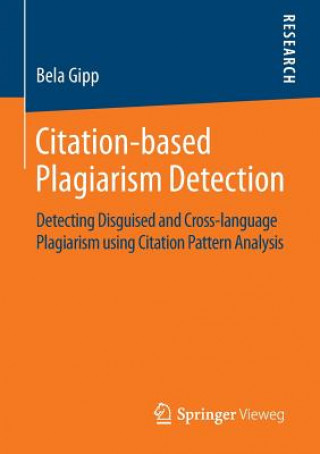
Citation-based Plagiarism Detection
Detecting Disguised and Cross-language Plagiarism using Citation Pattern Analysis
 Inglés
 139 b
139 b
Hasta 30 días para devoluciones
Clientes que también han comprado












 /
/
 Tapa blanda
 21.99
€
21.99
€



 /
Tapa blanda
18.19
€
/
Tapa blanda
18.19
€




 /
Tapa blanda
15.39
€
/
Tapa blanda
15.39
€


 /
Tapa blanda
8.89
€
/
Tapa blanda
8.89
€


 /
Tapa blanda
16.49
€
/
Tapa blanda
16.49
€









Plagiarism is a problem with far-reaching consequences for the sciences. However, even today s best software-based systems can only reliably identify copy & paste plagiarism. Disguised plagiarism forms, including paraphrased text, cross-language plagiarism, as well as structural and idea plagiarism often remain undetected. This weakness of current systems results in a large percentage of scientific plagiarism going undetected. Bela Gipp provides an overview of the state-of-the art in plagiarism detection and an analysis of why these approaches fail to detect disguised plagiarism forms. The author proposes Citation-based Plagiarism Detection to address this shortcoming. Unlike character-based approaches, this approach does not rely on text comparisons alone, but analyzes citation patterns within documents to form a language-independent "semantic fingerprint" for similarity assessment. The practicability of Citation-based Plagiarism Detection was proven by its capability to identify so-far non-machine detectable plagiarism in scientific publications.


Sobre el libro
Inglés

Regale este libro hoy
Es fácil
1 Añadir al carrito y elegir Entregar como regalo en el checkout 2 Le enviaremos un vale 3 El libro llegará a la dirección del destinatarioTambién puede interesarle






 /
Tapa dura
41.99
€
/
Tapa dura
41.99
€



 /
Tapa blanda
15.39
€
/
Tapa blanda
15.39
€




 /
Tapa blanda
20.09
€
/
Tapa blanda
20.09
€


 /
Tapa dura
17.79
€
/
Tapa dura
17.79
€




¡Hola! Soy Libroamiko, tu asesor de libros.
¿Cómo puedo ayudarte?