
 Contacto
 Cómo comprar
Entrega
Guía de compras
 Inglés
 224 b
224 b
Hasta 30 días para devoluciones
Clientes que también han comprado







 /
/
 Tapa blanda
 43.29
€
43.29
€



 /
Tapa blanda
78.59
€
/
Tapa blanda
78.59
€


 /
Tapa blanda
17.89
€
/
Tapa blanda
17.89
€







 /
Tapa blanda
48.29
€
/
Tapa blanda
48.29
€









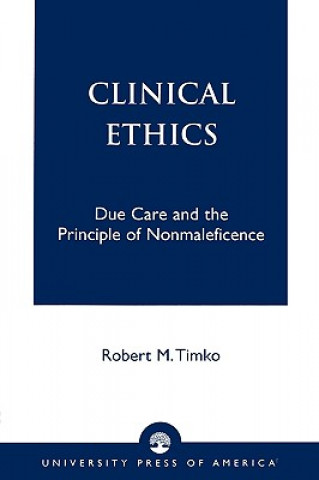
In Clinical Ethics, Robert Timko argues that the moral dilemmas of clinical medical practice can best be resolved within a framework of prima facie duties, and that the most stringent duty is that of nonmaleficence. Timko shows that respect for individual autonomy and the principle of beneficence are inadequate for the moral practice of medicine since simple adherence to either principle may be insufficient for the provision of 'due care.' Clinical health care practitioners should know and understand their clients' perceptions of illness and suffering and their life-plans and values if they wish to avoid bringing further harm to their clients. Additionally, Timko argues that the prevention of harm is best served and 'due care' best provided if the clinical relationship is defined within the framework of a covenantal agreement between health-care practitioners and the moral community. Intrinsic to his argument is the belief that it is not only permissible to limit a client's autonomy, but that is sometimes obligatory to do so. In terms of a community's overall good, paternalistic interventions appear to be justifiable and sometimes necessary. Finally, Joan Hoff provides an insightful commentary on the logic of a communitarian ethic as the foundation for a just health-care system and the understanding of virtue and responsibility in health-care practice.


Sobre el libro
Inglés

Regale este libro hoy
Es fácil
1 Añadir al carrito y elegir Entregar como regalo en el checkout 2 Le enviaremos un vale 3 El libro llegará a la dirección del destinatarioTambién puede interesarle




 /
Tapa blanda
18.59
€
/
Tapa blanda
18.59
€


















¡Hola! Soy Libroamiko, tu asesor de libros.
¿Cómo puedo ayudarte?