
 Contacto
 Cómo comprar
Entrega
Guía de compras
 Inglés
 31 b
31 b
Hasta 30 días para devoluciones
Clientes que también han comprado

 /
/
 Tapa blanda
 12.29
€
12.29
€






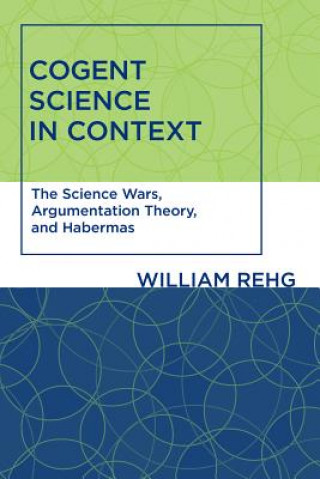
Recent years have seen a series of intense, increasingly acrimonious debates over the status and legitimacy of the natural sciences. These "science wars" take place in the public arena--with current battles over evolution and global warming--and in academia, where assumptions about scientific objectivity have been called into question. Given these hostilities, what makes a scientific claim merit our consideration? In Cogent Science in Context, William Rehg examines what makes scientific arguments cogent--that is, strong and convincing--and how we should assess that cogency. Drawing on the tools of argumentation theory, Rehg proposes a multidimensional, context-sensitive framework both for understanding the cogency of scientific arguments and for conducting cooperative interdisciplinary assessments of the cogency of actual scientific arguments. Rehg closely examines Jurgen Habermas's argumentation theory and its implications for understanding cogency, applying it to a case from high-energy physics. A series of problems, however, beset Habermas's approach. In response, Rehg outlines his own "critical contextualist" approach, which uses argumentation-theory categories in a new and more context-sensitive way inspired by ethnography of science.


Sobre el libro
Inglés

Regale este libro hoy
Es fácil
1 Añadir al carrito y elegir Entregar como regalo en el checkout 2 Le enviaremos un vale 3 El libro llegará a la dirección del destinatarioTambién puede interesarle





 /
Tapa blanda
31.49
€
/
Tapa blanda
31.49
€







¡Hola! Soy Libroamiko, tu asesor de libros.
¿Cómo puedo ayudarte?