
 Contacto
 Cómo comprar
Entrega
Guía de compras
Colonizing Nature
 Inglés
 205 b
205 b
Política de devolución de 30 días
Clientes que también han comprado


 /
/
 Tapa dura
 33.79
€
33.79
€
 /
Tapa blanda
7.89
€
/
Tapa blanda
7.89
€
 /
Tapa blanda
6.59
€
/
Tapa blanda
6.59
€










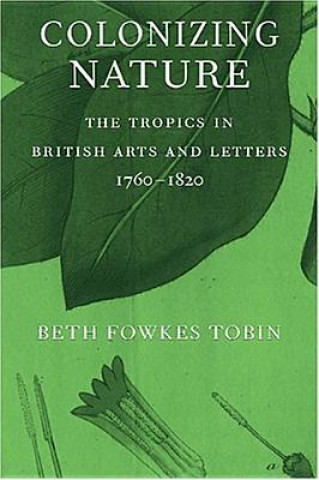
With its control of sugar plantations in the Caribbean and tea, cotton, and indigo production in India, Britain in the eighteenth and nineteenth centuries dominated the global economy of tropical agriculture. In Colonizing Nature, Beth Fowkes Tobin shows how dominion over "the tropics" as both a region and an idea became central to the way in which Britons imagined their role in the world. Tobin examines georgic poetry, landscape portraiture, natural history writing, and botanical prints produced by Britons in the Caribbean, the South Pacific, and India to uncover how each played a crucial role in developing the belief that the tropics were simultaneously paradisiacal and in need of British intervention and management. Her study examines how slave garden portraits denied the horticultural expertise of the slaves, how the East India Company hired such artists as William Hodges to paint and thereby Anglicize the landscape and gardens of British-controlled India, and how writers from Captain James Cook to Sir James E. Smith depicted tropical lands and plants. Just as mastery of tropical nature, and especially its potential for agricultural productivity, became key concepts in the formation of British imperial identity, Colonizing Nature suggests that intellectual and visual mastery of the tropics-through the creation of art and literature-accompanied material appropriations of land, labor, and natural resources. Tobin convincingly argues that the depictions of tropical plants, gardens, and landscapes that circulated in the British imagination provide a key to understanding the forces that shaped the British Empire.


Sobre el libro
Inglés

Regale este libro hoy
Es fácil
1 Añadir al carrito y elegir Entregar como regalo en el checkout 2 Le enviaremos un vale 3 El libro llegará a la dirección del destinatarioTambién puede interesarle















¡Hola! Soy Libroamiko, tu asesor de libros.
¿Cómo puedo ayudarte?