Contacto
 Cómo comprar
Entrega
Guía de compras
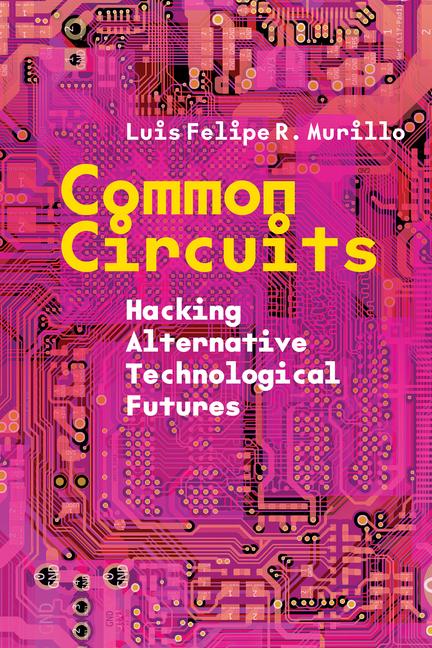
Common Circuits
 Inglés
 60 b
60 b
Política de devolución de 30 días
Clientes que también han comprado

 /
/
 Tapa dura
 20.39
€
20.39
€

 /
Tapa blanda
28.19
€
/
Tapa blanda
28.19
€


 /
Tapa blanda
27.49
€
/
Tapa blanda
27.49
€






 /
Tapa blanda
12.89
€
/
Tapa blanda
12.89
€



















 /
Tapa blanda
70.49
€
/
Tapa blanda
70.49
€

How hackers facilitate community technology projects that counter the monoculture of "big tech" and point us to brighter, innovative horizons.
A digital world in relentless movement-from artificial intelligence to ubiquitous computing-has been captured and reinvented as a monoculture by Silicon Valley "big tech" and venture capital firms. Yet very little is discussed in the public sphere about existing alternatives. Based on long-term field research across San Francisco, Tokyo, and Shenzhen, Common Circuits explores a transnational network of hacker spaces that stand as potent, but often invisible, alternatives to the dominant technology industry. In what ways have hackers challenged corporate projects of digital development? How do hacker collectives prefigure more just technological futures through community projects? Luis Felipe R. Murillo responds to these urgent questions with an analysis of the hard challenges of collaborative, autonomous community-making through technical objects conceived by hackers as convivial, shared technologies.
Through rich explorations of hacker space histories and biographical sketches of hackers who participate in them, Murillo describes the social and technical conditions that allowed for the creation of community projects such as anonymity and privacy networks to counter mass surveillance; community-made monitoring devices to measure radioactive contamination; and small-scale open hardware fabrication for the purposes of technological autonomy. Murillo shows how hacker collectives point us toward brighter technological futures-a renewal of the "digital commons"-where computing projects are constantly being repurposed for the common good.


Sobre el libro
Inglés
Categorías

Regale este libro hoy
Es fácil
1 Añadir al carrito y elegir Entregar como regalo en el checkout 2 Le enviaremos un vale 3 El libro llegará a la dirección del destinatarioTambién puede interesarle





 /
Tapa dura
31.49
€
/
Tapa dura
31.49
€












 /
Tapa blanda
16.29
€
/
Tapa blanda
16.29
€