
 Contacto
 Cómo comprar
Entrega
Guía de compras
Compiler Construction, 1
 Inglés
 148 b
148 b
Política de devolución de 30 días
Clientes que también han comprado







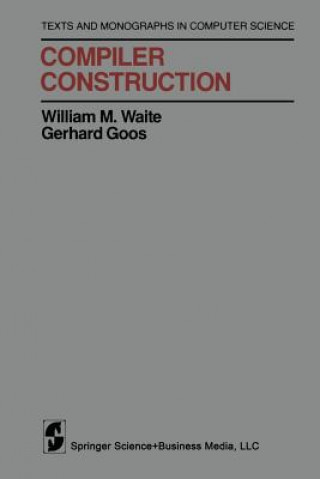
Compilers and operating systems constitute the basic interfaces between a programmer and the machine for which he is developing software. In this book we are concerned with the construction of the former. Our intent is to provide the reader with a firm theoretical basis for compiler construction and sound engineering principles for selecting alternate methods, imple menting them, and integrating them into a reliable, economically viable product. The emphasis is upon a clean decomposition employing modules that can be re-used for many compilers, separation of concerns to facilitate team programming, and flexibility to accommodate hardware and system constraints. A reader should be able to understand the questions he must ask when designing a compiler for language X on machine Y, what tradeoffs are possible, and what performance might be obtained. He should not feel that any part of the design rests on whim; each decision must be based upon specific, identifiable characteristics of the source and target languages or upon design goals of the compiler. The vast majority of computer professionals will never write a compiler. Nevertheless, study of compiler technology provides important benefits for almost everyone in the field . It focuses attention on the basic relationships between languages and machines. Understanding of these relationships eases the inevitable tran sitions to new hardware and programming languages and improves a person's ability to make appropriate tradeoft's in design and implementa tion .


Sobre el libro
Inglés
Categorías

Regale este libro hoy
Es fácil
1 Añadir al carrito y elegir Entregar como regalo en el checkout 2 Le enviaremos un vale 3 El libro llegará a la dirección del destinatarioTambién puede interesarle


¡Hola! Soy Libroamiko, tu asesor de libros.
¿Cómo puedo ayudarte?