
 Contacto
 Cómo comprar
Entrega
Guía de compras
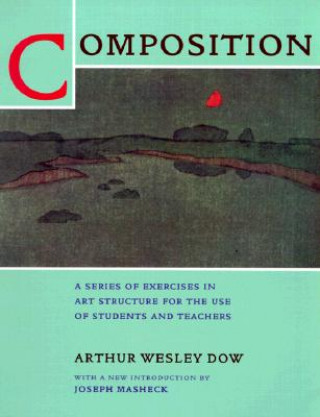
Composition
 Inglés
 127 b
127 b
Hasta 30 días para devoluciones
Clientes que también han comprado







 /
/
 Tapa blanda
 14.89
€
14.89
€


 /
Tapa blanda
36.69
€
/
Tapa blanda
36.69
€






 /
Tapa dura
58.99
€
/
Tapa dura
58.99
€
 /
/
 CD de audio
24.99
€
CD de audio
24.99
€

 /
Tapa dura
14.69
€
/
Tapa dura
14.69
€





 /
Tapa blanda
13.89
€
/
Tapa blanda
13.89
€
 /
Tapa blanda
15.19
€
/
Tapa blanda
15.19
€



First published in 1899, Arthur Wesley Dow's "Composition" has probably influenced more Americans than any other text to think of visual form and composition in relation to artistic modernity. While Dow is known as the mentor of Georgia O'Keeffe and Max Weber, his legacy as a proponent of modern art has suffered undeserved neglect by recent artists and art historians. In "Composition" Dow develops a system for teaching students to create freely constructed images on the basis of harmonic relations between lines, colors, and dark and light patterns. Greatly influenced by Japanese art, he expounds a theory of "flat" formal equilibrium as an essential component of telling pictorial creation. Generations of teachers and their public school pupils learned from Dow's orientalism and adopted basic postimpressionist principles without even knowing the term. The reappearance of Dow's practical, well-illustrated guide, enhanced by Joseph Masheck's discussion of its historical ramifications, is an important event for all concerned with the visual arts and the intellectual antecedents of American modernism.


Sobre el libro
Inglés
Categorías

Regale este libro hoy
Es fácil
1 Añadir al carrito y elegir Entregar como regalo en el checkout 2 Le enviaremos un vale 3 El libro llegará a la dirección del destinatarioTambién puede interesarle




 /
Tapa blanda
20.99
€
/
Tapa blanda
20.99
€














 /
Tapa blanda
28.79
€
/
Tapa blanda
28.79
€

 /
Tapa dura
123.59
€
/
Tapa dura
123.59
€



¡Hola! Soy Libroamiko, tu asesor de libros.
¿Cómo puedo ayudarte?