
 Contacto
 Cómo comprar
Entrega
Guía de compras
 Inglés
 118 b
118 b
Hasta 30 días para devoluciones
Clientes que también han comprado






 /
/
 Tapa blanda
 27.89
€
27.89
€






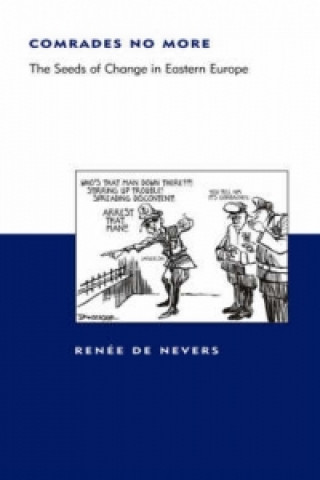
In 1989, Soviet control over Eastern Europe ended when the communist regimes of the Warsaw Pact collapsed. These momentous and largely bloodless events set the stage for the end of the Cold War and ushered in a new era in international politics. Why did communism collapse relatively peacefully in Eastern Europe? Why did these changes occur in 1989, after more than four decades of communist rule? Why did this upheaval happen almost simultaneously in most of the Warsaw Pact?In Comrades No More, Renee de Nevers examines how internal and external factors interacted in the collapse of East European communism. She argues that Gorbachev's reforms in the Soviet Union were necessary to start the process of political change in Eastern Europe, but domestic factors in each communist state determined when and how each country abandoned communism. A "demonstration effect" emerged as Hungary and Poland introduced reforms and showed that Moscow would not intervene to prevent political and economic changes.De Nevers analyzes the process of change in Hungary, Poland, Bulgaria, the German Democratic Republic, Czechoslovakia, and Romania. She traces the pattern of reform in each country and shows how these patterns influenced their postcommunist political evolution.


Sobre el libro
Inglés
Categorías

Regale este libro hoy
Es fácil
1 Añadir al carrito y elegir Entregar como regalo en el checkout 2 Le enviaremos un vale 3 El libro llegará a la dirección del destinatarioTambién puede interesarle








 /
Tapa blanda
225.39
€
/
Tapa blanda
225.39
€

 /
Tapa blanda
49.69
€
/
Tapa blanda
49.69
€



¡Hola! Soy Libroamiko, tu asesor de libros.
¿Cómo puedo ayudarte?