
 Contacto
 Cómo comprar
Entrega
Guía de compras
 Inglés
 177 b
177 b
Hasta 30 días para devoluciones
Clientes que también han comprado



















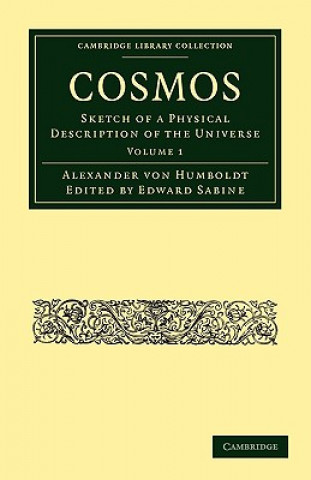
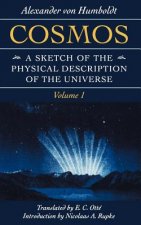
Polymath Alexander von Humboldt (1769–1859), a self-described 'scientific traveller', was one of the most respected scientists of his time. Humboldt's wanderlust led him across Europe and to South America, Mexico, the U.S., and Russia, and his voyages and observations resulted in the discovery of many species previously unknown to Europeans. Originating as lectures delivered in Berlin and Paris (1827–1828), his multi-volume Cosmos: Sketch of a Physical Description of the Universe (1845–1860) represented the culmination of his lifelong interest in understanding the physical world. As Humboldt writes, 'I ever desired to discern physical phenomena in their widest mutual connection, and to comprehend Nature as a whole, animated and moved by inward forces.' Volume 1 (1846) investigates celestial and terrestrial phenomena, from nebulae to the temperature of the earth, as well as 'organic life'. Throughout, he stresses the method of, and limits to, describing the universe's physical nature.


Sobre el libro
Inglés

Regale este libro hoy
Es fácil
1 Añadir al carrito y elegir Entregar como regalo en el checkout 2 Le enviaremos un vale 3 El libro llegará a la dirección del destinatarioTambién puede interesarle

 /
/
 Tapa blanda
 74.39
€
74.39
€




 /
Tapa blanda
17.29
€
/
Tapa blanda
17.29
€











¡Hola! Soy Libroamiko, tu asesor de libros.
¿Cómo puedo ayudarte?