
 Contacto
 Cómo comprar
Entrega
Guía de compras
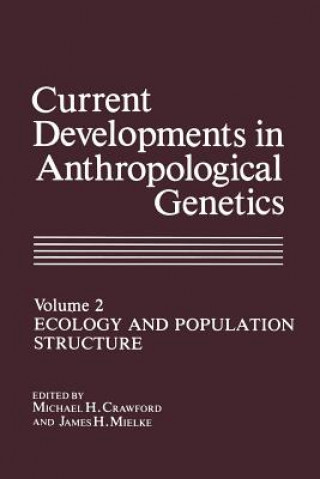
Current Developments in Anthropological Genetics
Ecology and Population Structure
 Inglés
 139 b
139 b
Política de devolución de 30 días
Clientes que también han comprado




 /
/
 Tapa blanda
 23.19
€
23.19
€



 /
Tapa blanda
19.89
€
/
Tapa blanda
19.89
€


 /
Tapa blanda
19.39
€
/
Tapa blanda
19.39
€

















This volume examines the interrelationship of ecology, subsistence pat terns, and the observed genetic variation in human populations. Hence, the book is divided conceptually into the following categories: nonhuman primates, hunters and gatherers, nomads, swidden agriculturalists, peas ant farmers, religious isolates, and modern and urban aggregates. While many of these populations have experienced (and are experiencing) ac culturation as a result of contact with technologically more advanced groups, the genetic structures described in this volume attempt to recon struct the traditional patterns as well as genetic changes because of con tact. Most chapters also integrate biological (genetic), social, and de mographic data within an ecological frame thus presenting a holistic view of the population structures of ecologically distinct groups. The first chapter examines the body of early nonhuman primate lit erature that emphasized ecological determinism in effecting the popula tion structure of our primate ancestors-relatives. It also examines more recent literature (since 1970) in which it became apparent that greater flexibility exists in primate social structure within specific environmental frameworks. Thus, it appears that our nonhuman primate evolutionary heritage is not one of ecological determinism in social organization but one of flexibility and rapid change suggesting the evolutionary success of our species is based upon a system of flexibility and that social ad aptations can be accomplished in a number of diverse ways.


Sobre el libro
Inglés

Regale este libro hoy
Es fácil
1 Añadir al carrito y elegir Entregar como regalo en el checkout 2 Le enviaremos un vale 3 El libro llegará a la dirección del destinatarioTambién puede interesarle








 /
Tapa blanda
17.29
€
/
Tapa blanda
17.29
€




 /
Tapa blanda
29.59
€
/
Tapa blanda
29.59
€










 /
Tapa blanda
640.49
€
/
Tapa blanda
640.49
€

¡Hola! Soy Libroamiko, tu asesor de libros.
¿Cómo puedo ayudarte?