
 Contacto
 Cómo comprar
Entrega
Guía de compras
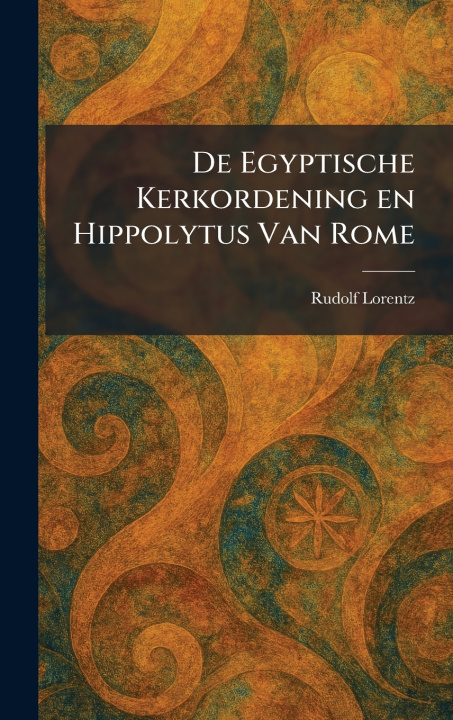
De Egyptische Kerkordening en Hippolytus Van Rome
 Holandés
 80 b
80 b
Política de devolución de 30 días

"De Egyptische Kerkordening en Hippolytus Van Rome" is een diepgaande historische en theologische studie naar de oorsprong en de invloed van vroege christelijke kerkregels. In dit werk onderzoekt Rudolf Lorentz de complexe relatie tussen de zogenaamde Egyptische Kerkordening en de geschriften van de kerkvader Hippolytus van Rome. Het boek richt zich op de liturgische praktijken, de wijding van ambtsdragers en de organisatorische structuur van de vroege christelijke gemeenschappen in de derde eeuw.
Door een nauwkeurige tekstanalyse werpt Lorentz licht op hoe deze kerkordening fungeerde als een fundament voor het kerkelijk recht en de eredienst. De auteur behandelt belangrijke vraagstukken rondom de authenticiteit van de teksten en hun verspreiding binnen de christelijke traditie. Dit werk is van essentieel belang voor studenten en onderzoekers van de patristiek, de liturgiegeschiedenis en de ontwikkeling van de institutionele kerk. Het biedt een helder inzicht in de wijze waarop tradities werden vastgelegd en doorgegeven in een tijdperk van grote theologische vorming.
This work has been selected by scholars as being culturally important, and is part of the knowledge base of civilization as we know it. This work was reproduced from the original artifact, and remains as true to the original work as possible. Therefore, you may see the original copyright references, library stamps (as most of these works have been housed in our most important libraries around the world), and other notations in the work.
This work is in the public domain in the United States of America, and possibly other nations. Within the United States, you may freely copy and distribute this work, as no entity (individual or corporate) has a copyright on the body of the work.
As a reproduction of a historical artifact, this work may contain missing or blurred pages, poor pictures, errant marks, etc. Scholars believe, and we concur, that this work is important enough to be preserved, reproduced, and made generally available to the public. We appreciate your support of the preservation process, and thank you for being an important part of keeping this knowledge alive and relevant.


Sobre el libro
Holandés
