
 Contacto
 Cómo comprar
Entrega
Guía de compras
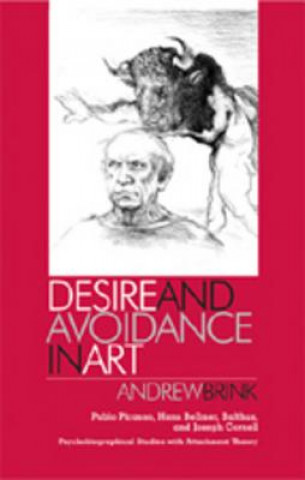
Desire and Avoidance in Art
Pablo Picasso, Hans Bellmer, Balthus, and Joseph Cornell Psychobiographical Studies with Attachment Theory
 Inglés
 239 b
239 b
Hasta 30 días para devoluciones
Clientes que también han comprado







 /
/
 Tapa blanda
 48.39
€
48.39
€











Desire and Avoidance in Art argues that while early developmental traumas can produce life-long creative endeavors with striking aesthetic results, they may also, for the male artist, result in destructive relations with women. Brink introduces the scheme of personality formation - as found in the work on infant and child development of John Bowlby, Mary Ainsworth, Mary Main, Patricia Crittenden, Allen N. Schore, and others - to explore a new venture in psychobiography. He effectively uses the concept of «anxious attachment» to describe mother-infant/child relations and their sequelae. Using pertinent developmental data found in each artist's childhood, Andrew Brink accounts for the anxious-avoidant attachment style (or, in Crittenden's terminology, the Anxious/Controlling style) from which these artists suffered. He aims to explain why partnerships with women are sometimes hazardous and frequently tragic for male artists by referencing various feminist writers. Based on their viewpoints, Brink extracts psychodynamic explanations that are largely based on what the artists' imagery reveals. Furthermore, he explains how the attachment theory of attraction-avoidance is shown to supplement and enrich other ways of understanding chronically tense relations between the sexes. Brink focuses his attention on artists such as Picasso, Bellmer, Balthus, and Cornell, who are culturally powerful and often stimulate discussion about misogynic figures within a social context.


Sobre el libro
Inglés

Regale este libro hoy
Es fácil
1 Añadir al carrito y elegir Entregar como regalo en el checkout 2 Le enviaremos un vale 3 El libro llegará a la dirección del destinatarioTambién puede interesarle
 /
Tapa blanda
25.79
€
/
Tapa blanda
25.79
€






 /
Tapa blanda
14.09
€
/
Tapa blanda
14.09
€












 /
Tapa dura
167.79
€
/
Tapa dura
167.79
€





¡Hola! Soy Libroamiko, tu asesor de libros.
¿Cómo puedo ayudarte?