Contacto
 Cómo comprar
Entrega
Guía de compras
 Inglés
 115 b
115 b
Hasta 30 días para devoluciones
Clientes que también han comprado

 /
/
 Tapa dura
 36.39
€
36.39
€
 /
Tapa blanda
30.59
€
/
Tapa blanda
30.59
€



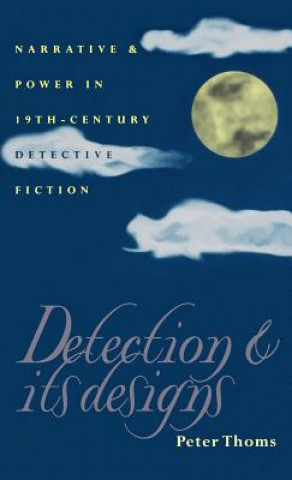
Detective fiction is usually thought of as genre fiction, a vast group of works bound together by their use of a common formula. But, as Peter Thoms argues in his investigation of some of the most important texts in the development of detective fiction in the nineteenth century, the very works that establish the genre's formulaic structure also subvert that structure. "Detection and Its Designs" reads early detective fiction as a self-conscious form that is suspicious of the detective it ostensibly celebrates, and critical of the authorial power he wields in attempting to reconstruct the past and script a narrative of the crime. In readings of Godwin's "Caleb Williams," Poe's Dupin stories, Dickens's "Bleak House," Collins's "The Moonstone," and Doyle's "The Hound of the Baskervilles," Thoms argues that the detective's figurative writing emerges out of a desire to exert control over others and sometimes over himself. "Detection and Its Designs" demonstrates that, far from being a naive form, early detective fiction grapples with the medium of storytelling itself. To pursue these inward-turning fictions is to uncover the detective's motives of controlling the representation of both himself and others, a discovery that in turn significantly undermines the authority of his solutions.


Sobre el libro
Inglés

Regale este libro hoy
Es fácil
1 Añadir al carrito y elegir Entregar como regalo en el checkout 2 Le enviaremos un vale 3 El libro llegará a la dirección del destinatarioTambién puede interesarle

 /
Tapa blanda
35.39
€
/
Tapa blanda
35.39
€