
 Contacto
 Cómo comprar
Entrega
Guía de compras
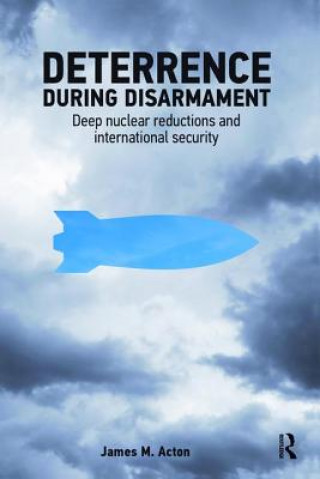
Deterrence During Disarmament
 Inglés
 678 b
678 b
Hasta 30 días para devoluciones
Clientes que también han comprado











 /
/
 Tapa blanda
 24.79
€
24.79
€






There is a broad sense in both Russia and the United States that deep nuclear reductions—a goal endorsed by both governments—would constitute a risky step into the unknown and could undermine international security. However, until now, the reasons behind these concerns—and whether they are justified—have not been properly explored. Based on a series of interviews with opinion formers in both Russia and the United States, this Adelphi maps out these concerns as they relate to the effectiveness of deterrence (including extended deterrence), the possible incentives to use nuclear weapons first in a crisis, the potential for rearmament and nuclear multipolarity. Contrary to popular belief, there is evidence against which these fears can be assessed. The practical experience of deterrence at low numbers that was acquired by the Soviet Union and the United States early in the Cold War, as well as by other nuclear-armed states, is highly relevant. Based on this experience and insights from deterrence theory, this Adelphi concludes that most of the challenges associated with low numbers are not really a consequence of arsenal size and, accordingly, that there are good reasons to believe that deep reductions would not undermine international security.


Sobre el libro
Inglés
Categorías

Regale este libro hoy
Es fácil
1 Añadir al carrito y elegir Entregar como regalo en el checkout 2 Le enviaremos un vale 3 El libro llegará a la dirección del destinatarioTambién puede interesarle
 /
Tapa blanda
18.19
€
/
Tapa blanda
18.19
€

 /
Tapa blanda
39.69
€
/
Tapa blanda
39.69
€




 /
Tapa blanda
23.99
€
/
Tapa blanda
23.99
€

 /
Tapa dura
50.39
€
/
Tapa dura
50.39
€


 /
Tapa blanda
34.09
€
/
Tapa blanda
34.09
€




 /
Tapa blanda
40.59
€
/
Tapa blanda
40.59
€

¡Hola! Soy Libroamiko, tu asesor de libros.
¿Cómo puedo ayudarte?