
 Contacto
 Cómo comprar
Entrega
Guía de compras
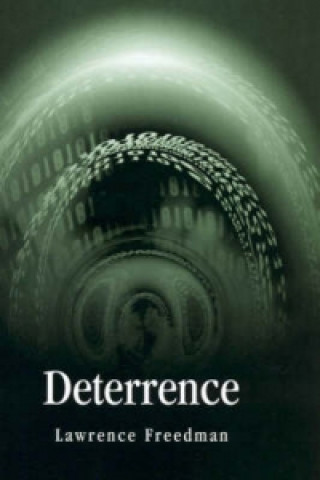
Deterrence
 Inglés
 52 b
52 b
 Popular
Hasta 30 días para devoluciones
Clientes que también han comprado
 /
/
 Tapa dura
 34.29
€
34.29
€







As a concept, deterrence has launched a thousand books and articles. It has dominated Western strategic thinking for more than four decades. In this important and groundbreaking new book, Lawrence Freedman develops a distinctive approach to the evaluation of deterrence as both a state of mind and a strategic option. This approach is applied to post--cold war crisis management, and the utility and relevance of the concept is addressed in relation to US strategic practice post--9/11, particularly in the light of the apparent preference of the Bush Administration for the alternative concept of pre--emption. The study of deterrence has been hampered by the weight of the intellectual baggage accumulated since the end of the Second World War. Exaggerated notions of what deterrence might achieve were developed, only to be to knocked down by academic critique. In this book, Freedman charts the evolution of the contemporary concept of deterrence, and discusses whether -- and how -- it still has relevance in todaya s world. He considers constructivist as well as realist approaches and draws on criminological as well as strategic studies literature to develop a concept of a norms--based, as opposed to an interest--based, deterrence. This book will be essential reading for students of politics and international relations as well as all those interested in contemporary strategic thought.


Sobre el libro
Inglés

Regale este libro hoy
Es fácil
1 Añadir al carrito y elegir Entregar como regalo en el checkout 2 Le enviaremos un vale 3 El libro llegará a la dirección del destinatarioTambién puede interesarle










 /
Tapa dura
77.19
€
/
Tapa dura
77.19
€

 /
Tapa dura
25.89
€
/
Tapa dura
25.89
€








 /
Tapa blanda
11.19
€
/
Tapa blanda
11.19
€
¡Hola! Soy Libroamiko, tu asesor de libros.
¿Cómo puedo ayudarte?