
 Contacto
 Cómo comprar
Entrega
Guía de compras
 Inglés
 127 b
127 b
Hasta 30 días para devoluciones
Clientes que también han comprado

 /
/
 Tapa blanda
 58.09
€
58.09
€













 /
Tapa blanda
14.19
€
/
Tapa blanda
14.19
€


 /
Tapa blanda
58.09
€
/
Tapa blanda
58.09
€

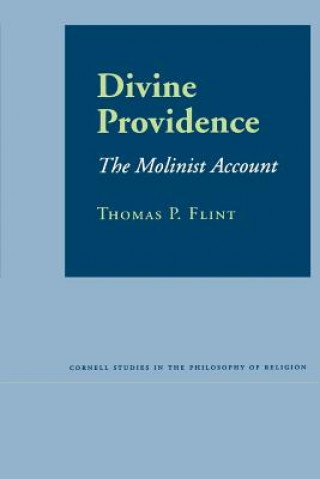
Thomas P. Flint develops and defends the idea of divine providence sketched by Luis de Molina, the sixteenth-century Jesuit theologian. The Molinist account of divine providence reconciles two claims long thought to be incompatible: that God is the all-knowing governor of the universe and that individual freedom can prevail only in a universe free of absolute determinism. The Molinist concept of middle knowledge holds that God knows, though he has no control over, truths about how any individual would freely choose to act in any situation, even if the person never encounters that situation. Given such knowledge, God can be truly providential while leaving his creatures genuinely free. Divine Providence is by far the most detailed and extensive presentation of the Molinist view ever written.Middle knowledge is hotly debated in philosophical theology, and the controversy spills over into metaphysics and moral philosophy as well. Flint ably defends the concept against its most influential contemporary critics, and shows its importance to Christian practice. With particular originality and sophistication, he applies Molinism to such aspects of providence as prayer, prophecy, and the notion of papal infallibility, teasing out the full range of implications for traditional Christianity.


Sobre el libro
Inglés

Regale este libro hoy
Es fácil
1 Añadir al carrito y elegir Entregar como regalo en el checkout 2 Le enviaremos un vale 3 El libro llegará a la dirección del destinatarioTambién puede interesarle

 /
Tapa blanda
11.59
€
/
Tapa blanda
11.59
€

 /
Tapa dura
181.49
€
/
Tapa dura
181.49
€




 /
Tapa blanda
20.09
€
/
Tapa blanda
20.09
€















¡Hola! Soy Libroamiko, tu asesor de libros.
¿Cómo puedo ayudarte?