
 Contacto
 Cómo comprar
Entrega
Guía de compras
 Inglés
 51 b
51 b
 Nuevo
Nuevo
Hasta 30 días para devoluciones

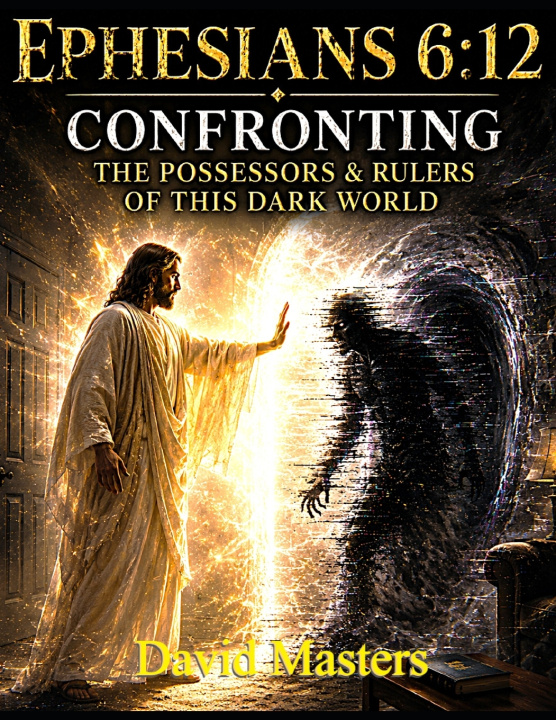
This book begins with a question that refuses to sit still: what exactly are people encountering when they confront non-human intelligences? Across decades of testimony, clinical interviews, spiritual accounts, and modern UFO discourse, a consistent pattern emerges-beings that appear intelligent, intentional, and aware of the individual human mind, yet do not behave like anything we can comfortably classify within known biology or psychology. The language used to describe them shifts depending on culture and era, but the core experience remains strangely persistent. Some call them extraterrestrials, others call them entities, others still frame them as spiritual intelligences or psychological projections. The discomfort begins when we realize that none of these categories fully contains the phenomenon.
The modern default assumption leans toward extraterrestrial explanation, shaped by science fiction, aerospace technology, and the idea that advanced physical civilizations might traverse interstellar space. In this model, the "alien" is simply a biological being from another planet, operating within a physical universe governed by the same laws we understand, only more advanced in technology. This framing is comforting in its familiarity. It preserves materialism, it preserves scientific continuity, and it keeps the mystery safely contained within the boundaries of physics. Yet even within the most serious UFO reports, something does not quite fit that model cleanly, particularly when the experience begins to overlap with consciousness itself.
Across a separate but overlapping body of testimony, the language changes. Instead of craft and pilots, we hear of presences, intelligences, watchers, guides, tricksters, or intrusions that seem to interact directly with thought, emotion, and perception. These encounters are not merely visual sightings; they are experiential events that often occur in altered states of awareness-dreams, hypnagogic episodes, sleep paralysis, deep trauma states, or moments of psychological breakdown and reconstruction. Here the term "entity" begins to replace "alien," not because it is more mystical, but because it is more structurally accurate to what is being described: something that behaves like intelligence without necessarily conforming to physical embodiment as we understand it.
The distinction between entity and extraterrestrial is not simply semantic. It reflects two radically different assumptions about reality. The extraterrestrial model assumes that consciousness is produced by biology and that all intelligence must therefore be rooted in physical organisms somewhere in space-time. The entity model, by contrast, allows for the possibility that intelligence may not be strictly dependent on biological form, and may instead operate through fields of consciousness, perception, or dimensional structures that interact with the human mind in ways we are only beginning to map.
Ultimately, the purpose of this book is not to force a conclusion, but to refine perception. If we rush to label these experiences as either "just aliens" or "just hallucinations," we risk missing the deeper architecture of the phenomenon itself. The real task is to understand how consciousness, identity, suggestion, and possibly non-human intelligence intersect in a single field of experience that humans have been reporting for as long as history has recorded their stories. Only by holding the question open can we begin to see what has been hidden in plain sight.


Sobre el libro
Inglés
Categorías

Regale este libro hoy
Es fácil
1 Añadir al carrito y elegir Entregar como regalo en el checkout 2 Le enviaremos un vale 3 El libro llegará a la dirección del destinatario¡Hola! Soy Libroamiko, tu asesor de libros.
¿Cómo puedo ayudarte?