
 Contacto
 Cómo comprar
Entrega
Guía de compras
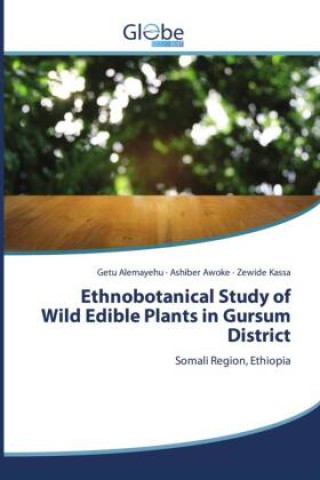
Ethnobotanical Study of Wild Edible Plants in Gursum District
Somali Region, Ethiopia.DE
 Inglés
 161 b
161 b
 Nuevo
Nuevo
Política de devolución de 30 días

Background: Wild edible plants (WEPs) are vital components of traditional food systems, supporting nutrition, health, and livelihood resilience in food-insecure and climate-vulnerable regions. In eastern Ethiopia, particularly the Somali Region, communities rely on WEPs to supplement diets and cope with seasonal food shortages. However, comprehensive documentation of species diversity, indigenous knowledge, and conservation challenges remains limited. This study assessed the diversity, use patterns, indigenous knowledge, and public health relevance of WEPs in Gursum District. Methods: An ethnobotanical survey was conducted from February to December 2024 using semi-structured interviews, focus group discussions, guided field walks, and market surveys. A total of 100 informants, including 25 key informants, were selected through purposive and snowball sampling. Plant specimens were collected and identified using standard taxonomic references, with voucher numbers assigned. Quantitative ethnobotanical indices and statistical analyses (ANOVA, regression) were applied to examine knowledge distribution across socio-demographic groups.


Sobre el libro
Inglés
Categorías
