
 Contacto
 Cómo comprar
Entrega
Guía de compras
 Inglés
 237 b
237 b
Hasta 30 días para devoluciones
Clientes que también han comprado




 /
/
 Tapa blanda
 72.79
€
72.79
€













 /
Tapa blanda
42.39
€
/
Tapa blanda
42.39
€



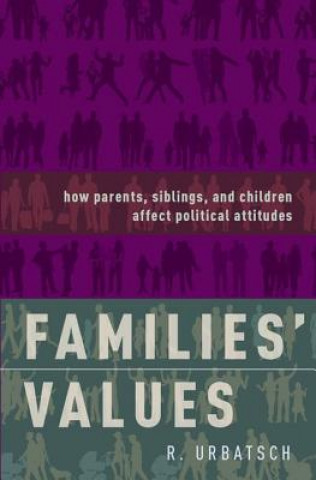
One of the central questions in politics is from where people derive their tastes and opinions. Why do some people embrace the free market, while others prefer an interventionist state? From where do preferences for a vigorous foreign policy or for sterner policing of moral issues come? As has been shown, political preferences may be influenced by perceived benefits, the media, or public intellectuals. But less in known about the influence of family on political attitudes. Some mechanisms of family influence are well known: people tend to share their parents' political philosophies, while those with young children have heightened concern for child-related policies like education. But family members are likely to have far richer and more varied effects than those traditionally considered. Families' Values considers the ways that the everyday behavior of family members systematically and unconsciously influence political preferences. For example, does having a mother who works outside the home lead children to, when grown, have more liberal ideologies? Or, might having a son who could potentially be drafted into the armed forces influence a parent to become a pacifist? Drawing on surveys from the United States and the United Kingdom, the book looks at the ways in which parents, siblings, birth order, gender, and socioeconomics influence opinions on issues from war to the welfare state to abortion. It demonstrates that family relationships play a crucial and multi-faceted role in the way that people experience, learn about, and practice politics.


Sobre el libro
Inglés

Regale este libro hoy
Es fácil
1 Añadir al carrito y elegir Entregar como regalo en el checkout 2 Le enviaremos un vale 3 El libro llegará a la dirección del destinatarioTambién puede interesarle

 /
Tapa dura
47.49
€
/
Tapa dura
47.49
€




 /
Tapa blanda
10.69
€
/
Tapa blanda
10.69
€














 /
Tapa blanda
33.89
€
/
Tapa blanda
33.89
€

 /
Tapa dura
36.89
€
/
Tapa dura
36.89
€



¡Hola! Soy Libroamiko, tu asesor de libros.
¿Cómo puedo ayudarte?