
 Contacto
 Cómo comprar
Entrega
Guía de compras
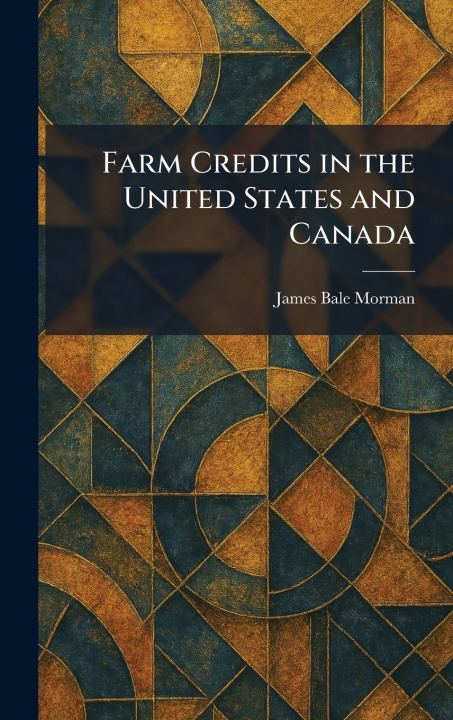
Farm Credits in the United States and Canada
 Inglés
 97 b
97 b
Política de devolución de 30 días

"Farm Credits in the United States and Canada" is a comprehensive and authoritative analysis of the financial systems and credit mechanisms that supported the agricultural sectors of North America during a pivotal era of development. Written by James Bale Morman, a specialist in rural economics, this work provides an in-depth exploration of how farmers in both the United States and Canada accessed capital for land, equipment, and seasonal operations.
The text meticulously examines the legislative history and the institutional frameworks established to address the unique economic needs of the agrarian community. By offering a comparative study of the two nations, Morman illustrates the different strategies and policies-ranging from federal interventions to cooperative banking initiatives-employed to stabilize rural markets and provide long-term mortgage relief. The work highlights the struggle for equitable credit and the evolving role of government in securing the financial future of the farming population.
Valuable for scholars of economic history, agricultural policy, and rural sociology, this book serves as an essential record of the structural challenges and successes of early 20th-century farm finance. It offers deep insight into the foundational principles that continue to influence agricultural economics and the relationship between credit availability and national prosperity.
This work has been selected by scholars as being culturally important, and is part of the knowledge base of civilization as we know it. This work was reproduced from the original artifact, and remains as true to the original work as possible. Therefore, you may see the original copyright references, library stamps (as most of these works have been housed in our most important libraries around the world), and other notations in the work.
This work is in the public domain in the United States of America, and possibly other nations. Within the United States, you may freely copy and distribute this work, as no entity (individual or corporate) has a copyright on the body of the work.
As a reproduction of a historical artifact, this work may contain missing or blurred pages, poor pictures, errant marks, etc. Scholars believe, and we concur, that this work is important enough to be preserved, reproduced, and made generally available to the public. We appreciate your support of the preservation process, and thank you for being an important part of keeping this knowledge alive and relevant.


Sobre el libro
Inglés
Categorías
