Contacto
 Cómo comprar
Entrega
Guía de compras
 Inglés
 149 b
149 b
Hasta 30 días para devoluciones
Clientes que también han comprado

 /
/
 Tapa blanda
 8.39
€
8.39
€




 /
Tapa blanda
21.59
€
/
Tapa blanda
21.59
€








 /
Tapa blanda
11.89
€
/
Tapa blanda
11.89
€










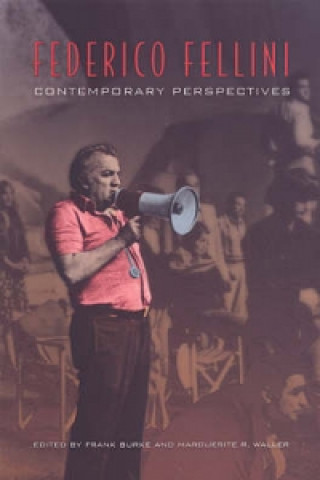
Federico Fellini remains the best known of the postwar Italian directors. This collection of essays brings Fellini criticism up to date, employing a range of recent critical filters, including semiotic, psychoanalytical, feminist and deconstructionist. Accordingly, a number of important themes arise - the reception of fascism, the crisis of the subject, the question of agency, homo-eroticism, feminism, and constructions of gender. Since the early 1970s, a slide in critical and theoretical attention to Fellini's work has corresponded with an assumption that his films are self-indulgent and lacking in political value. This volume moves the discussion towards a politics of signification, contending that Fellini's evolving self-reflexivity is not mere solipsism but rather a critique of both aesthetics and signification. The essays presented here are almost all new - the two exceptions being important signifiers in Fellini studies. The first, Frank Burke's "Federico Fellini: Reality/Representation/Signification" laid the foundation in the late 1980s for considering Fellini's work in the light of postmodernism. The second, Marguerite Waller's "Whose Dolce Vita is this Anyway?: The Language of Fellini's Cinema" (1990), provides a contemporary re-reading of Fellini's most successful film.This lively and ambitious collection brings a new critical language to bear on Fellini's films, offering fresh insights into their underlying issues and meaning. In bringing Fellini criticism up to date, it will have a significant impact on film studies, reclaiming this important director for a contemporary audience.


Sobre el libro
Inglés
Categorías

Regale este libro hoy
Es fácil
1 Añadir al carrito y elegir Entregar como regalo en el checkout 2 Le enviaremos un vale 3 El libro llegará a la dirección del destinatarioTambién puede interesarle






 /
Tapa dura
45.59
€
/
Tapa dura
45.59
€


 /
Tapa blanda
13.69
€
/
Tapa blanda
13.69
€
 /
Tapa dura
24.29
€
/
Tapa dura
24.29
€








 /
Tapa blanda
19.09
€
/
Tapa blanda
19.09
€





 /
Tapa blanda
29.59
€
/
Tapa blanda
29.59
€