
 Contacto
 Cómo comprar
Entrega
Guía de compras
French Philosophies of the Romantic Period
 Inglés
 66 b
66 b
Política de devolución de 30 días

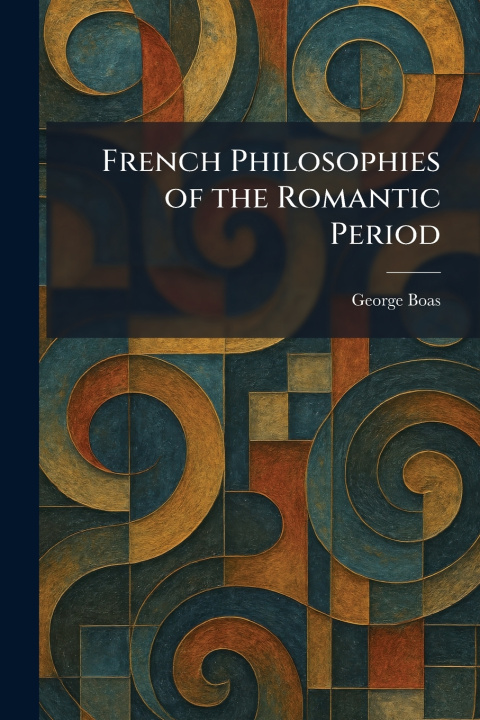
"French Philosophies of the Romantic Period" is a definitive examination of the intellectual landscape in France during the late eighteenth and early nineteenth centuries. George Boas provides a structured analysis of the evolution of thought that defined an era of profound social and political transformation. The work navigates the complex transition from the analytical rigor of the Enlightenment to the diverse philosophical currents of Romanticism, covering essential movements such as Ideology, Traditionalism, and Eclecticism.
The text delves into the contributions of influential figures like Maine de Biran and Victor Cousin, illustrating how their theories on psychology, religion, and the state mirrored the turbulent atmosphere of post-Revolutionary France. By contextualizing these philosophies within their historical milieu, Boas demonstrates the enduring significance of Romantic thought in shaping modern epistemology and social theory.
As a significant contribution to the history of ideas, "French Philosophies of the Romantic Period" remains a vital resource for scholars and students of philosophy and French history alike. It captures the intellectual vitality of a period that bridged the gap between classical tradition and contemporary philosophical inquiry.
This work has been selected by scholars as being culturally important, and is part of the knowledge base of civilization as we know it. This work was reproduced from the original artifact, and remains as true to the original work as possible. Therefore, you may see the original copyright references, library stamps (as most of these works have been housed in our most important libraries around the world), and other notations in the work.
This work is in the public domain in the United States of America, and possibly other nations. Within the United States, you may freely copy and distribute this work, as no entity (individual or corporate) has a copyright on the body of the work.
As a reproduction of a historical artifact, this work may contain missing or blurred pages, poor pictures, errant marks, etc. Scholars believe, and we concur, that this work is important enough to be preserved, reproduced, and made generally available to the public. We appreciate your support of the preservation process, and thank you for being an important part of keeping this knowledge alive and relevant.


Sobre el libro
Inglés
