
 Contacto
 Cómo comprar
Entrega
Guía de compras
 Inglés
 183 b
183 b
Hasta 30 días para devoluciones
Clientes que también han comprado

 /
/
 Tapa blanda
 46.59
€
46.59
€








 /
Tapa blanda
14.99
€
/
Tapa blanda
14.99
€










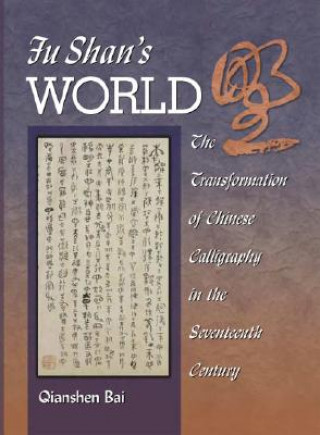
For 1,300 years, Chinese calligraphy was based on the elegant art of Wang Xizhi (AD303-361). But the 17th-century emergence of a style modelled on the rough, broken epigraphs of ancient bronzes and stone artifacts brought a revolution in calligraphic taste. By the 18th century, this led to the formation of the stele school of calligraphy, which continues to shape Chinese calligraphy today. A dominant force in this school was the eminent calligrapher and art theorist Fu Shan (1607-1685). Because his work spans the late Ming-early Qing divide, it is an ideal prism through which to view the transformation in calligraphy. Rather than seek a single explanation for the change in calligraphic taste, the author demonstrates and analyzes the heterogeneity of the cultural, social and political processes behind it. Among other subjects, the book covers late Ming interaction between high and low culture; the role of publishing, the Ming loyalist response to the Qing; and early Qing changes in intellectual discourse. In addition to the usual approach of art historians, it adopts the theoretical perspectives of such fields as material culture, print culture, and social and intellectual history.


Sobre el libro
Inglés
Categorías

Regale este libro hoy
Es fácil
1 Añadir al carrito y elegir Entregar como regalo en el checkout 2 Le enviaremos un vale 3 El libro llegará a la dirección del destinatarioTambién puede interesarle




 /
Tapa blanda
20.09
€
/
Tapa blanda
20.09
€


 /
Tapa dura
347.29
€
/
Tapa dura
347.29
€
 /
Tapa dura
187.69
€
/
Tapa dura
187.69
€














¡Hola! Soy Libroamiko, tu asesor de libros.
¿Cómo puedo ayudarte?