
 Contacto
 Cómo comprar
Entrega
Guía de compras
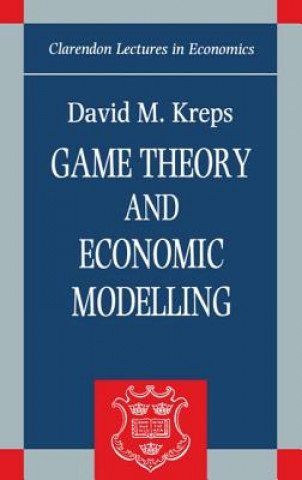
Game Theory and Economic Modelling
 Inglés
 204 b
204 b
Hasta 30 días para devoluciones
Clientes que también han comprado




















 /
/
 Tapa blanda
 32.19
€
32.19
€


Over the past two decades, academic economics has undergone a mild revolution in methodology. The language, concepts and techniques of noncooperative game theory have become central to the discipline. This book provides the reader with some basic concepts from noncooperative theory, and then goes on to explore the strengths, weaknesses, and future of the theory as a tool of economic modelling and analysis. The central theses are that noncooperative game theory has been a remarkably popular tool in economics over the past decade because it allows analysts to capture essential features of dynamic competition and competition where some parties have proprietary information. The theory is weakest in providing a sense of when it - and equilibrium analysis in particular - can be applied and what to do when equilibrium analysis is inappropriate. Many of these weaknesses can be addressed by the consideration of individuals who are boundedly rational and learn imperfectly from the past. Written in a non-technical style and working by analogy, the book, first given as part of the Clarendon Lectures in Economics, is readily accessible to a broad audience and will be of interest to economists and students alike. Knowledge of game theory is not required as the concepts are developed as the book progresses.


Sobre el libro
Inglés

Regale este libro hoy
Es fácil
1 Añadir al carrito y elegir Entregar como regalo en el checkout 2 Le enviaremos un vale 3 El libro llegará a la dirección del destinatarioTambién puede interesarle













 /
Tapa blanda
25.89
€
/
Tapa blanda
25.89
€
 /
Tapa blanda
7.99
€
/
Tapa blanda
7.99
€

 /
Tapa blanda
7.99
€
/
Tapa blanda
7.99
€







¡Hola! Soy Libroamiko, tu asesor de libros.
¿Cómo puedo ayudarte?