
 Contacto
 Cómo comprar
Entrega
Guía de compras
 Inglés
 168 b
168 b
Hasta 30 días para devoluciones
Clientes que también han comprado











 /
/
 Tapa blanda
 21.79
€
21.79
€



 /
Tapa blanda
19.99
€
/
Tapa blanda
19.99
€
 /
Tapa blanda
16.09
€
/
Tapa blanda
16.09
€



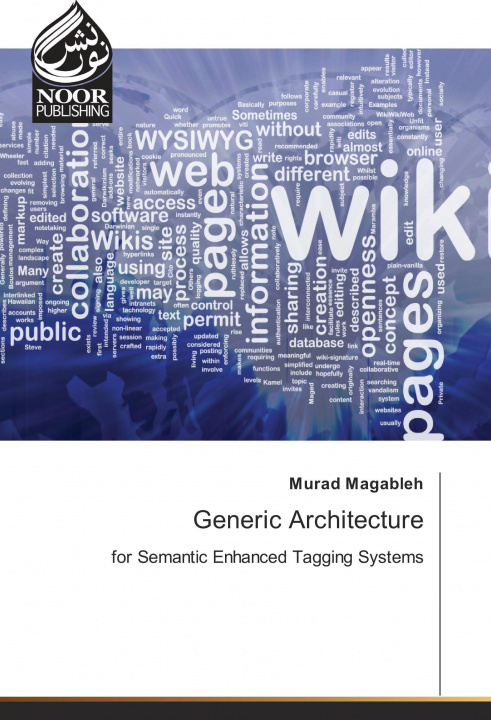
The Social Web, or Web 2.0, has recently gained popularity because of its low cost and ease of use. Social tagging sites (e.g. Flickr and YouTube) offer new principles for end users to publish and classify their content (data). Tagging systems contain free-keywords (tags) generated by end-users to annotate and categorise data. Lack of semantics is the main drawback in social tagging due to the use of unstructured vocabulary. Therefore, tagging systems suffer from shortcomings such as low precision, lack of collocation, synonymy, multilinguality, and use of short-hands writing. Consequently, relevant contents are not visible, and thus, not retrievable while searching in tag-based systems. On the other hand, the Semantic Web, so-called Web 3.0, provides a rich semantic infrastructure. Ontologies are the key enabling technology for the Semantic Web. Ontologies can be integrated with the Social Web to overcome the lack of semantics in tagging systems. This work builds an architecture to address a number of tagging systems drawbacks. In particular, we make use of the controlled vocabularies presented by ontologies to improve the information retrieval in tag-based systems.


Sobre el libro
Inglés

Regale este libro hoy
Es fácil
1 Añadir al carrito y elegir Entregar como regalo en el checkout 2 Le enviaremos un vale 3 El libro llegará a la dirección del destinatarioTambién puede interesarle














 /
Tapa blanda
49.79
€
/
Tapa blanda
49.79
€
 /
Tapa blanda
28.89
€
/
Tapa blanda
28.89
€





 /
Tapa dura
33.69
€
/
Tapa dura
33.69
€



¡Hola! Soy Libroamiko, tu asesor de libros.
¿Cómo puedo ayudarte?