
 Contacto
 Cómo comprar
Entrega
Guía de compras
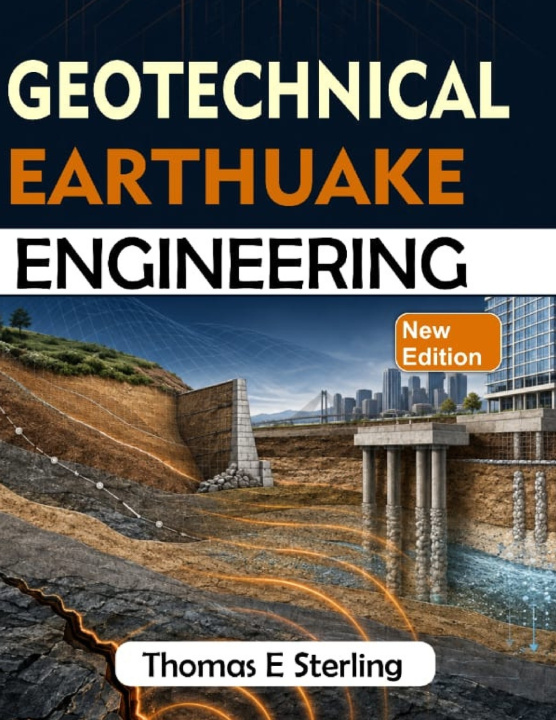
GEOTECHNICAL EARTHQUAKE ENGINEERING
Soil Dynamics, Seismic Site Response, Liquefaction, Foundations, and Ground Improvement
 Inglés
 308 b
308 b
 Próximamente
 Nuevo
Nuevo
Hasta 30 días para devoluciones

Understand the Ground. Reduce Seismic Risk. Design with Confidence.
Earthquakes do more than shake structures - they can change the behavior of the ground itself. Soil can lose strength, settle, spread laterally, or amplify shaking before it ever reaches a foundation. Slopes fail. Retaining systems deform. Buried utilities shift. Even a well-designed structure can be compromised by ground no one fully understood.
Geotechnical Earthquake Engineering: Soil Dynamics, Seismic Site Response, Liquefaction, Foundations, and Ground Improvement gives you a practical path through these problems - turning seismic ground behavior into sound, defensible engineering decisions.
Why This Book Is Different
Most resources treat seismic hazard, soil dynamics, liquefaction, foundations, and mitigation as separate subjects, leaving you to connect the dots yourself. This book follows the actual sequence of real engineering work instead: characterize the site, define the earthquake demand, evaluate soil response, identify failure mechanisms, estimate deformation, assess consequences, and select the right mitigation.
If you've ever struggled to separate liquefaction triggering from its post-liquefaction consequences, or inertial interaction from kinematic interaction, this book draws the line clearly - so the distinction becomes intuitive, not just memorized.
Every key relationship is explained through assumptions, derivations, units, and engineering interpretation - not just equations. You'll see what a result means, why it matters, and how it should shape a design decision.
What You'll Gain
- Confidence reading a site through field and laboratory characterization, shear-wave velocity profiling, and dynamic soil property evaluation
- The ability to predict how ground will actually behave through 1D and nonlinear site response analysis
- A defensible liquefaction and deformation assessment - covering triggering, settlement, lateral spreading, and seismic slope stability
- Sound foundation and structure decisions - through soil-foundation-structure interaction and shallow/deep foundation response
- Practical answers for retaining structures, dams, tunnels, and lifelines - including surface fault rupture and permanent ground deformation
- A clear path to mitigation - through ground improvement techniques and performance-based design principles
- The chance to test your understanding - through worked examples, complete calculations, and practice problems with answers
The cost of getting this wrong isn't hypothetical.** Ground that isn't properly understood is ground that can undo an otherwise sound design. Build the judgment to catch it before it becomes a failure.
Add Geotechnical Earthquake Engineering oto your technical library today - and approach every seismic ground problem with clarity, not guesswork.


Sobre el libro
Inglés
Categorías
