
 Contacto
 Cómo comprar
Entrega
Guía de compras
 Inglés
 1085 b
Hasta 30 días para devoluciones
Clientes que también han comprado

 /
/
 Tapa blanda
 27.19
€
27.19
€










 /
Tapa blanda
37.39
€
/
Tapa blanda
37.39
€

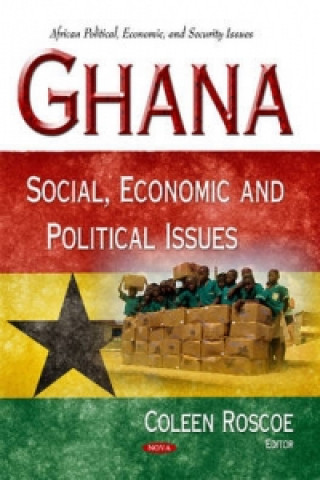
Like many of its peers in sub-Saharan Africa, Ghana''s journey to democracy has been a tortuous one indeed. To the extent that governance is about the equitable distribution of societal resources, Ghana, like many African societies, has been grappling with the problem of governance since time immemorial. Before the advent of colonial rule, several African societies had established a variety of political systems with corresponding political, economic, and social institutions which dealt with allocation of resources, law-making, and social and political control based, for the most part, on family and kinship relations associated with communalism and consensual decision making. Besides the fact that the inauguration of the colonial project curtailed the natural evolution of the democratic governance engendered by the rule of chiefs during this period in Africa''s history, colonial rule was generally based on both economic exploitation and racial injustice. It entailed economic exploitation of natural resources and social and political exclusion of indigenous Africans from decision making. This twin evil of the colonial project became the main motivation for the adoption of socialist principles of organisation by many African states in the immediate post-independence period. This book discusses several topics on Ghana''s social, economic and political issues. These include Pan-African connections, development and the experiences of the historic Agrican Diaspora; women in Ghana; the use of iron in West Africa; ethnicity and political participation in Ghana; the nuclearisation of Ghanaian families; evaluation of the health financing sub-functions; and a study of migrants in Tema.


Sobre el libro
Inglés

Regale este libro hoy
Es fácil
1 Añadir al carrito y elegir Entregar como regalo en el checkout 2 Le enviaremos un vale 3 El libro llegará a la dirección del destinatarioTambién puede interesarle







 /
Tapa dura
36.59
€
/
Tapa dura
36.59
€



 /
Tapa blanda
6.49
€
/
Tapa blanda
6.49
€












¡Hola! Soy Libroamiko, tu asesor de libros.
¿Cómo puedo ayudarte?