
 Contacto
 Cómo comprar
Entrega
Guía de compras
 Inglés
 114 b
114 b
Hasta 30 días para devoluciones
Clientes que también han comprado

































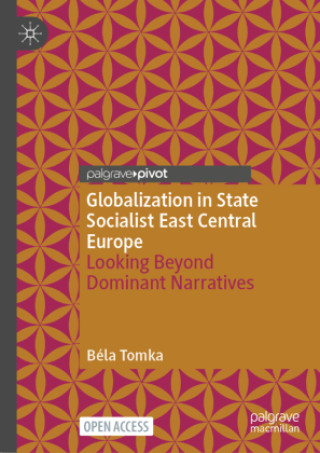
This is open access Palgrave Pivot explores four major aspects of globalisation: foreign trade, capital and information flows, and the movement of people. The book examines how the state socialist countries of East Central Europe fit into the general trend of globalisation after WWII. It focuses on three specific countries in the region: Poland, Czechoslovakia, and Hungary. The study also considers conceptual problems: whether recently introduced terms such as 'alternative globalisation' and 'socialist proto-globalisation' are plausible for interpreting state socialist globalisation. Special attention is paid to the study of continuities and discontinuities in the process of globalisation in East Central Europe, which is a key issue in current debates. This requires a long-term perspective, so the study focuses not only on the decades before 1989 but also on subsequent developments. This allows the book to try to find a balance between old and new mainstream interpretations: it recognises that East Central European societies experienced considerable globalisation during the state socialist era. However, based on empirical findings, instead of 'alternative' or 'proto' globalisation, the book suggests other notions to conceptualise this process, including fragmentation, selectivity, and unevenness. Thus, the proposed understanding could also contribute to discussions on globalisation beyond East Central Europe.


Sobre el libro
Inglés

Regale este libro hoy
Es fácil
1 Añadir al carrito y elegir Entregar como regalo en el checkout 2 Le enviaremos un vale 3 El libro llegará a la dirección del destinatarioTambién puede interesarle




 /
/
 Tapa blanda
 34.09
€
34.09
€

 /
Tapa blanda
14.50
€
/
Tapa blanda
14.50
€








 /
Tapa dura
20.99
€
/
Tapa dura
20.99
€








¡Hola! Soy Libroamiko, tu asesor de libros.
¿Cómo puedo ayudarte?