
 Contacto
 Cómo comprar
Entrega
Guía de compras
 Inglés
 522 b
522 b
Política de devolución de 30 días
Clientes que también han comprado









 /
/
 Tapa blanda
 60.89
€
60.89
€













 /
Tapa blanda
60.89
€
/
Tapa blanda
60.89
€





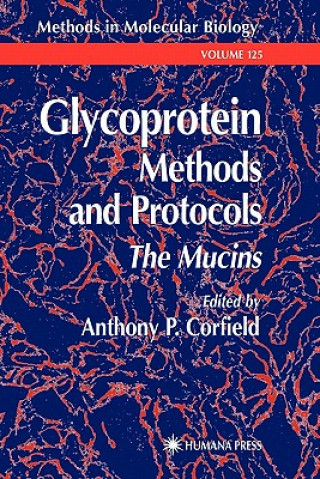
The mucins (mucus glycoproteins) have long been a complex corner of glycoprotein biology. While dramatic advances in the separation, structural an- ysis, biosynthesis, and degradation have marked the progress in general glycop- tein understanding, the mucins have lagged behind. The reasons for this lack of progress have always been clear and are only now being resolved. The mucins are very large molecules; they are difficult to separate from other molecules present in mucosal secretions or membranes; they are often degraded owing to natural protective functions or to isolation methodology and their peptide and oligos- charide structures are varied and complex. Understanding these molecules has demanded progress in several major areas. Isolation techniques that protect the intact mucins and allow dissociation from other adsorbed but discrete molecules needed to be developed and accepted by all researchers in the field. Improved methods for the study of very large molecules with regard to their aggregation and polymerization were also needed. Structural analysis of the peptide domains and the multitude of oligosaccharide chains was required for smaller sample sizes, for multiple samples, and in shorter time. In view of these problems it is perhaps not surprising that the mucins have remained a dilemma, of obvious biological importance and interest, but very difficult to analyze.


Sobre el libro
Inglés

Regale este libro hoy
Es fácil
1 Añadir al carrito y elegir Entregar como regalo en el checkout 2 Le enviaremos un vale 3 El libro llegará a la dirección del destinatarioTambién puede interesarle








 /
Tapa dura
37.69
€
/
Tapa dura
37.69
€












¡Hola! Soy Libroamiko, tu asesor de libros.
¿Cómo puedo ayudarte?