
 Contacto
 Cómo comprar
Entrega
Guía de compras
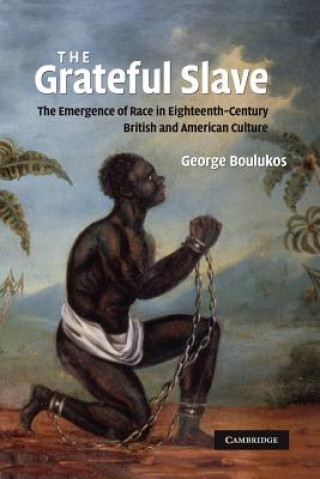
Grateful Slave
The Emergence of Race in Eighteenth-Century British and American Culture
 Inglés
 144 b
144 b
Política de devolución de 30 días
Clientes que también han comprado



The figure of the grateful slave, devoted to his or her master in thanks for kind treatment, is ubiquitous in eighteenth-century writing from Daniel Defoe's Colonel Jack (1722) to Maria Edgeworth's 'The Grateful Negro' (1804). Yet this important trope, linked with discourses that tried to justify racial oppression, slavery and colonialism, has been overlooked in eighteenth-century literary research. Challenging previous accounts of the relationship between sentiment and slavery, in this 2008 book George Boulukos shows how the image of the grateful slave contributed to colonial practices of white supremacy in the later eighteenth century. Seemingly sympathetic to slaves, the trope actually undermines their cause and denies their humanity by showing African slaves as willingly accepting their condition. Taking in literary sources as well as texts on colonialism and slavery, Boulukos offers a fresh account of the development of racial difference, and of its transatlantic dissemination, in the eighteenth-century English-speaking world.


Sobre el libro
Inglés
Categorías

Regale este libro hoy
Es fácil
1 Añadir al carrito y elegir Entregar como regalo en el checkout 2 Le enviaremos un vale 3 El libro llegará a la dirección del destinatarioTambién puede interesarle


 /
/
 Tapa dura
 60.39
€
60.39
€











¡Hola! Soy Libroamiko, tu asesor de libros.
¿Cómo puedo ayudarte?