
 Contacto
 Cómo comprar
Entrega
Guía de compras
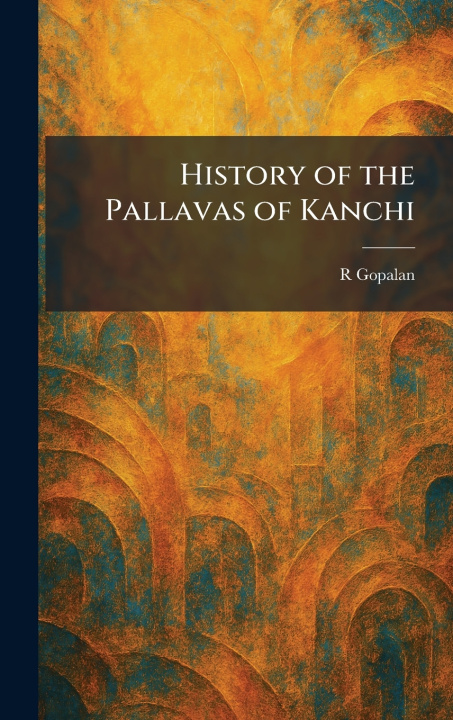
History of the Pallavas of Kanchi
 Inglés
 85 b
85 b
 Nuevo
Nuevo
Política de devolución de 30 días

"History of the Pallavas of Kanchi" is a comprehensive scholarly examination of one of South India's most influential dynasties. Ruling from their capital in Kanchipuram, the Pallavas played a pivotal role in shaping the political, cultural, and religious landscape of the Indian subcontinent from the 3rd to the 9th centuries CE. R. Gopalan provides a detailed chronological account of the dynasty, tracing its origins, the zenith of its power under rulers like Mahendravarman I and Narasimhavarman I, and its eventual decline.
The work delves into the administrative systems, social structures, and economic conditions that defined the Pallava era. It highlights the dynasty's profound contributions to art and architecture, particularly the transition from rock-cut temples to structural stone edifices, which laid the foundation for Dravidian temple architecture. Drawing upon epigraphical evidence, copper-plate grants, and contemporary literary sources, the author offers a rigorous analysis of the geopolitical struggles between the Pallavas and their rivals, including the Chalukyas and Pandyas. This foundational text remains an essential resource for students and historians interested in ancient South Indian history and the maritime influence of Kanchi across Southeast Asia.
This work has been selected by scholars as being culturally important, and is part of the knowledge base of civilization as we know it. This work was reproduced from the original artifact, and remains as true to the original work as possible. Therefore, you may see the original copyright references, library stamps (as most of these works have been housed in our most important libraries around the world), and other notations in the work.
This work is in the public domain in the United States of America, and possibly other nations. Within the United States, you may freely copy and distribute this work, as no entity (individual or corporate) has a copyright on the body of the work.
As a reproduction of a historical artifact, this work may contain missing or blurred pages, poor pictures, errant marks, etc. Scholars believe, and we concur, that this work is important enough to be preserved, reproduced, and made generally available to the public. We appreciate your support of the preservation process, and thank you for being an important part of keeping this knowledge alive and relevant.


Sobre el libro
Inglés
