
 Contacto
 Cómo comprar
Entrega
Guía de compras
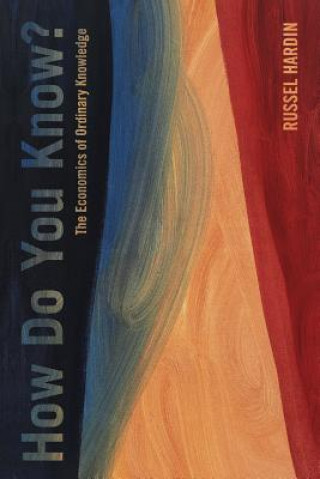
How Do You Know?
 Inglés
 68 b
68 b
Política de devolución de 30 días
Clientes que también han comprado






 Tapa blanda
 54.49
€
54.49
€








 /
Tapa blanda
16.09
€
/
Tapa blanda
16.09
€


 /
Tapa blanda
28.99
€
/
Tapa blanda
28.99
€







How do ordinary people come to know or believe what they do? We need an account of this process to help explain why people act as they do. You might think I am acting irrationally--against my interest or my purpose--until you realize that what you know and what I know differ significantly. My actions, given my knowledge, might make eminently good sense. Of course, this pushes our problem back one stage to assess why someone knows or believes what they do. That is the focus of this book. Russell Hardin supposes that people are not usually going to act knowingly against their interests or other purposes. To try to understand how they have come to their knowledge or beliefs is therefore to be charitable in assessing their rationality. Hardin insists on such a charitable stance in the effort to understand others and their sometimes objectively perverse actions. Hardin presents an essentially economic account of what an individual can come to know and then applies this account to many areas of ordinary life: political participation, religious beliefs, popular knowledge of science, liberalism, culture, extremism, moral beliefs, and institutional knowledge. All of these can be enlightened by the supposition that people are attempting reasonable actions under the severe constraints of acquiring better knowledge when they face demands that far outstretch their possibilities.


Sobre el libro
Inglés

Regale este libro hoy
Es fácil
1 Añadir al carrito y elegir Entregar como regalo en el checkout 2 Le enviaremos un vale 3 El libro llegará a la dirección del destinatarioTambién puede interesarle






 /
Tapa blanda
8.99
€
/
Tapa blanda
8.99
€













¡Hola! Soy Libroamiko, tu asesor de libros.
¿Cómo puedo ayudarte?