
 Contacto
 Cómo comprar
Entrega
Guía de compras
 Inglés
 169 b
169 b
Hasta 30 días para devoluciones
Clientes que también han comprado



 /
/
 Tapa dura
 48.49
€
48.49
€







 /
Tapa blanda
22.09
€
/
Tapa blanda
22.09
€


 /
Tapa blanda
36.59
€
/
Tapa blanda
36.59
€






 /
Tapa blanda
58.09
€
/
Tapa blanda
58.09
€


 /
Tapa blanda
19.79
€
/
Tapa blanda
19.79
€

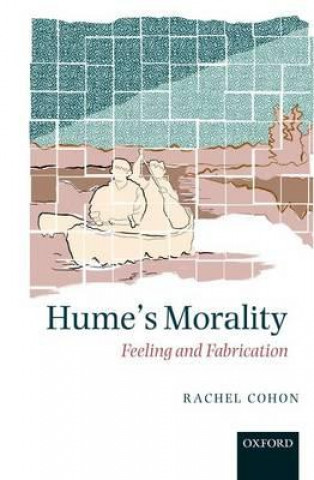
Rachel Cohon offers an original interpretation of the moral philosophy of David Hume, focusing on two areas. Firstly, his metaethics. Cohon reinterprets Hume's claim that moral distinctions are not derived from reason and explains why he makes it. She finds that Hume did not actually hold three "Humean" claims: 1) that beliefs alone cannot move us to act, 2) that evaluative propositions cannot be validly inferred from purely factual propositions, or 3) that moral judgments lack truth value. According to Hume, human beings discern moral virtues and vices by means of feeling or emotion in a way rather like sensing; but this also gives the moral judge a truth-apt idea of a virtue or vice as a felt property. Secondly, Cohon examines the artificial virtues. Hume says that although many virtues are refinements of natural human tendencies, others (such as honesty) are constructed by social convention to make cooperation possible; and some of these generate paradoxes. She argues that Hume sees these traits as prosthetic virtues that compensate for deficiencies in human nature. However, their true status clashes with our common-sense conception of a virtue, and so has been concealed, giving rise to the paradoxes.


Sobre el libro
Inglés

Regale este libro hoy
Es fácil
1 Añadir al carrito y elegir Entregar como regalo en el checkout 2 Le enviaremos un vale 3 El libro llegará a la dirección del destinatarioTambién puede interesarle






 /
Tapa dura
259.19
€
/
Tapa dura
259.19
€
 /
Tapa blanda
61.19
€
/
Tapa blanda
61.19
€
 /
Tapa blanda
20.09
€
/
Tapa blanda
20.09
€





 /
Tapa blanda
8.79
€
/
Tapa blanda
8.79
€
 /
Tapa blanda
14.09
€
/
Tapa blanda
14.09
€
 /
Tapa blanda
8.89
€
/
Tapa blanda
8.89
€







¡Hola! Soy Libroamiko, tu asesor de libros.
¿Cómo puedo ayudarte?