
 Contacto
 Cómo comprar
Entrega
Guía de compras
Imagining Monsters - Miscreations of the Self in Eighteenth-Century England
 Inglés
 118 b
118 b
Hasta 30 días para devoluciones
Clientes que también han comprado





 /
/
 Tapa dura
 69.09
€
69.09
€




 /
Tapa blanda
26.99
€
/
Tapa blanda
26.99
€



 /
Tapa blanda
31.29
€
/
Tapa blanda
31.29
€

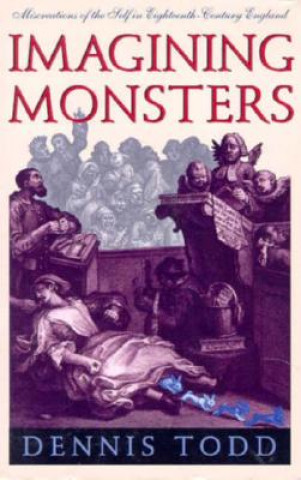
In 1726, an illiterate woman from Surrey named Mary Toft announced that she had given birth to 17 rabbits. Deceiving respected physicians and citizens alike, she created a hoax that held England spellbound for months. This study recreates the story of this incident and shows how it illuminates 18th-century beliefs about the power of imagination and the problems of personal identity. Mary Toft's outrageous claim was accepted because of a common belief that the imagination of a pregnant woman could deform her foetus, creating a monster within her. Drawing on material from medicine, embryology, philosophy and popular "monster" exhibitions, Todd shows that such ideas about monstrous births expressed a fear central to scientific, literary and philosophical thinking: that the imagination could transgress the barrier between mind and body. In his analysis of the Toft case, Todd exposes deep anxieties about the threat this transgressive imagination posed to the idea of the self as stable, coherent and autonomous. Major works of Pope and Swift reveal that they, too, were concerned with these issues, and this study provides discussions of "Gulliver's Travels" and "The Dunciad" illustrating how these writers used images of monstrosity to explore the problematic nature of human identity. It also includes a provocative analysis of Pope's later work that takes into account his physical deformity and his need to defend himself in a society that linked a deformed body with a deformed character.


Sobre el libro
Inglés

Regale este libro hoy
Es fácil
1 Añadir al carrito y elegir Entregar como regalo en el checkout 2 Le enviaremos un vale 3 El libro llegará a la dirección del destinatarioTambién puede interesarle



 /
Tapa blanda
33.69
€
/
Tapa blanda
33.69
€
 /
Tapa blanda
22.59
€
/
Tapa blanda
22.59
€
 /
Tapa blanda
169.09
€
/
Tapa blanda
169.09
€
 /
Tapa blanda
35.49
€
/
Tapa blanda
35.49
€




 /
Tapa blanda
112.79
€
/
Tapa blanda
112.79
€


 /
Tapa blanda
318.79
€
/
Tapa blanda
318.79
€
¡Hola! Soy Libroamiko, tu asesor de libros.
¿Cómo puedo ayudarte?