Contacto
 Cómo comprar
Entrega
Guía de compras
 Inglés
 270 b
270 b
Política de devolución de 30 días
Clientes que también han comprado

 /
/
 binding.
 30.89
€
30.89
€

 /
binding.
25.69
€
/
binding.
25.69
€



 /
/
 Juguete
37.09
€
Juguete
37.09
€








 /
Tapa blanda
18.09
€
/
Tapa blanda
18.09
€



 /
Tapa blanda
59.39
€
/
Tapa blanda
59.39
€
 /
Tapa blanda
10.69
€
/
Tapa blanda
10.69
€





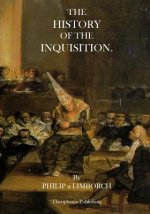
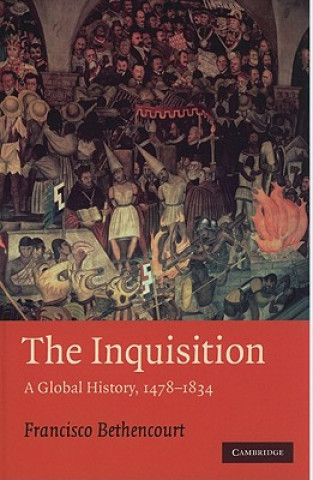
The Inquisition was the most powerful disciplinary institution in the early modern world, responsible for 300,000 trials and over 1.5 million denunciations. How did it root itself in different social and ethnic environments? Why did it last for three centuries? What cultural, social and political changes led to its abolition? In this first global comparative study, published ijn 2009, Francisco Bethencourt examines the Inquisition's activities in Spain, Italy, Portugal and overseas Iberian colonies. He demonstrates that the Inquisition played a crucial role in the Catholic Reformation, imposing its own members in papal elections, reshaping ecclesiastical hierarchy, defining orthodoxy, controlling information and knowledge, influencing politics and framing daily life. He challenges both traditionalist and revisionist perceptions of the tribunal. Bethencourt shows the Inquisition as an ever evolving body, eager to enlarge jurisdiction and obtain political support to implement its system of values, but also vulnerable to manipulation by rulers, cardinals, and local social elites.


Sobre el libro
Inglés